
King Fahd Airport Attack Sparks Massive Regional Alarm Across Mideast
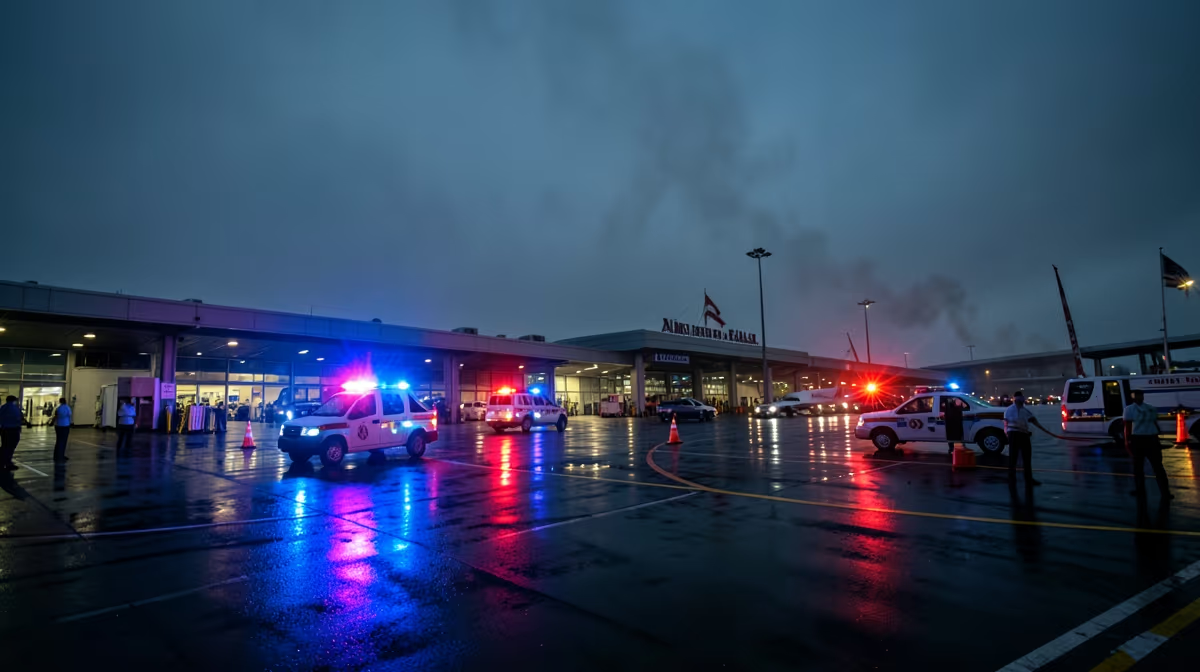
Air travel hubs are engineered to operate as secure gateways, yet a cross-border strike in Saudi Arabia's Eastern Province has pierced that perimeter with lethal consequences. The confirmed Houthi attack on King Fahd Airport in Dammam highlights a severe breach of civilian aviation safety, underscoring the persistent volatility that threatens key transit arteries across the Middle East.
The lethal targeting of King Fahd International Airport and nearby energy infrastructure exposes acute vulnerabilities in regional defense architectures, testing ongoing diplomatic efforts and commercial aviation safety.
Emergency services and regional defense units were forced into immediate action following the incident at King Fahd International Airport, also known as Dammam airport. The strike disrupted standard operations at one of the country's primary commercial aviation facilities, prompting an immediate operational review by the General Authority of Civil Aviation (GACA) and security authorities across the Kingdom.
Confirmed Impact at Dammam Hub
Official dispatches from Saudi Arabia’s General Authority of Civil Aviation (GACA) confirmed that the assault resulted in immediate human casualties inside the international aviation facility. Emergency personnel deployed directly to the terminal areas and flight perimeters to treat victims and secure the site.
- One person was confirmed killed as a direct result of the strike on the airport grounds.
- Eight individuals sustained injuries of varying severity and received emergency medical treatment.
- Aviation authorities initiated safety and security protocols to evaluate structural damage across the terminal and runway areas.
- Concurrent projectile strikes reportedly targeted critical energy infrastructure, including an Aramco oil field.
The casualty figures were documented by regional and international media, including Al Jazeera, Firstpost, The Times of Israel, and ANI News, confirming the severity of the aerial assault on a civilian transportation hub.
Strategic Geography and Infrastructure Exposure
King Fahd International Airport functions as the critical aviation gateway for Saudi Arabia’s Eastern Province, accommodating extensive commercial travel, corporate transit, and cargo logistics. Situated in close proximity to major industrial zones, the facility anchors the Kingdom's eastern transport network.
Targeting this location directly challenges civil aviation safety. Aviation hubs and strategic infrastructure are vital components of global connectivity and commerce. When such infrastructure is subjected to aerial bombardment, the consequences extend past physical destruction to disrupt flight scheduling, international supply lines, and commercial transport corridors.
Reports highlighting concurrent strikes on Aramco oil assets further illustrate the concentrated threat faced by Saudi Arabia's dual-engine economic nodes: international transport and petroleum production.
Regional Conflict Mechanics and Escalation Roots
The strike on Dammam represents an extension of cross-border military escalation tied directly to the protracted Yemeni conflict. Houthi forces have repeatedly utilized projectile weapons and drone technology to reach deep into Saudi territory, testing air defense systems and civilian security protocols.
Beyond direct physical damage, strikes against vital transportation assets challenge the domestic defense framework designed to safeguard Saudi Arabia's commercial and energy corridors.
The incident echoes historical precedents in the region, drawing structural parallels to the 2019 Abqaiq-Khurais drone attacks. Those strikes temporarily disrupted Saudi petroleum output and brought global attention to the vulnerabilities inherent in centralized energy and transit infrastructure.
The renewed assault on King Fahd International Airport emphasizes that despite diplomatic engagements, the underlying drivers of cross-border hostility remain active and capable of generating operational disruptions at vital infrastructure points.
Economic Fallout and Institutional Pressures
The strategic ramifications of the attack extend directly into Saudi Arabia’s broader economic modernization objectives. Strategic initiatives under Vision 2030 rely heavily on positioning the Kingdom as an open, highly secure destination for international tourism, foreign investment, and multinational corporate headquarters.
- Heightened risk premiums for commercial aviation: Attacks on international airports introduce operational complications for global carriers navigating Middle East airspace, driving up insurance and operational safety costs.
- Threat to economic diversification: Persistent strikes targeting corporate and transit nodes in the Eastern Province risk deterring foreign entities considering establishing operational bases in the Kingdom.
- Vulnerability of critical energy links: Continued assaults on energy sites like Aramco oil fields generate volatility across global energy markets that rely on uninterrupted Saudi production and export stability.
The strike exerts domestic pressure on Saudi leadership to reaffirm its capability to shield vital civilian assets, while also testing the viability of regional security pacts and existing ceasefires.
Projected Scenarios and Immediate Outlook
The operational and political environment following the Dammam strike remains volatile. Security assessments indicate that responses will evolve across defined timeframes as authorities inspect structural impacts and evaluate broader regional defenses.
| Phase | Projected Developments | Strategic Focus |
|---|---|---|
| Next 24 Hours | Damage inspections at King Fahd Airport; structural reviews of targeted Aramco assets | Public safety enforcement, heightened air defense readiness |
| Next 72 Hours | Diplomatic mobilization, official coalition statements, security consultations | Assessment of regional defense architecture and potential countermeasures |
Analysts monitor two distinct trajectories following the King Fahd International Airport incident:
Best-Case Projection
Worst-Case Projection
Frequently Asked Questions
What happened during the attack on King Fahd Airport in Saudi Arabia?
An attack targeted King Fahd International Airport in Dammam, Saudi Arabia, resulting in casualties and property disruption. According to reports from GACA and news outlets, at least one person was killed and several others were injured.
Who was behind the attack on King Fahd International Airport?
Reports indicate that Houthi forces were responsible for the assault on the Saudi Arabian airport. This incident forms part of a broader pattern of cross-border strikes targeting vital infrastructure in the region.
How many casualties were reported from the Dammam airport attack?
Official updates and news sources confirmed that one person was killed and eight individuals sustained injuries during the strike. Emergency services responded quickly to assist the victims at the scene.
Why are Houthi attacks on Saudi airports significant?
These attacks pose severe threats to regional security, international aviation, and civilian safety. Targeting major transport hubs like King Fahd International Airport also disrupts vital economic and travel routes.
What facilities besides King Fahd Airport have been targeted?
Alongside the incident at King Fahd International Airport in Dammam, concurrent or similar attacks have targeted critical energy infrastructure, such as Aramco oil fields. These escalations highlight the vulnerability of key Saudi assets to aerial assaults.
What happens next following the attack on Saudi Arabia's airport?
Authorities are expected to enhance security measures across major transportation and energy sites in Saudi Arabia. Meanwhile, international condemnation and regional security evaluations continue in response to the escalation.
Conclusion
The fatal strike on King Fahd International Airport in Dammam has resulted in confirmed civilian casualties, marked by one death and eight injuries documented by aviation authorities and international media. Concurrent impacts reported at Aramco oil infrastructure highlight the sustained exposure of the Kingdom's critical transport and energy facilities. In the near term, Saudi authorities are focused on evaluating the structural damage, heightening air defense readiness across critical hubs, and determining diplomatic or security responses alongside regional partners.
Sources
- One killed, eight injured in attack on Saudi Arabia’s King Fahd airport — Al Jazeera
- Three killed in attacks on Aramco oil field, Saudi's King Fahd airport — Moneycontrol.com
- 1 killed, 8 injured in attack on Saudi Arabia’s Dammam airport — Firstpost
- Houthi Attack on King Fahd Airport Kills 1, Injures 8, GACA Says — https://houseofsaud.com/
- Saudi Arabia reports 1 killed in attack on Dammam international airport — The Times of Israel
- One dead, eight injured in attack on King Fahd International Airport in Saudi Arabia's Dammam — ANI News


