
Anthony Fauci Testimony Sparks Fierce Capitol Hill Showdown
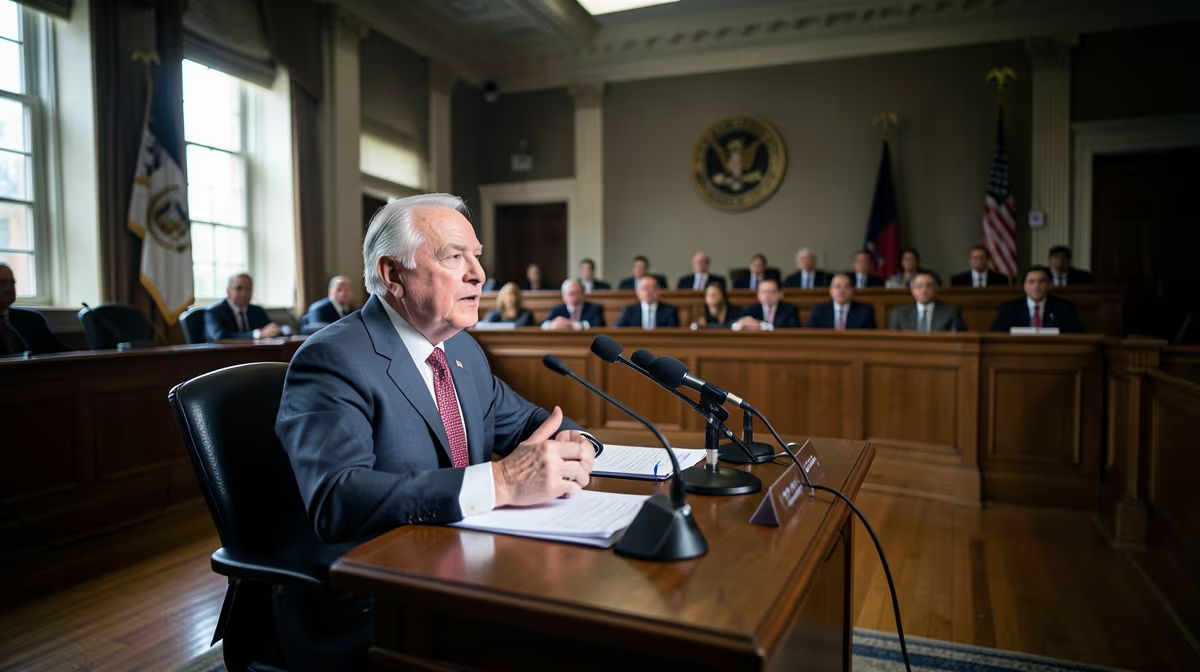
As lawmakers press forward with investigations, the latest anthony fauci testimony has sparked intense debate across Capitol Hill. Dr. Anthony Fauci defended his pandemic leadership before the House Select Subcommittee on the Coronavirus Pandemic on Monday, forcefully denying allegations of covering up the origins of COVID-19 and evading accountability. The proceedings drew immediate scrutiny from political analysts, policy-makers, and news consumers interested in government transparency and accountability, highlighting deep institutional divisions that continue to shape public trust in federal health agencies.
Chronicle of the Proceedings
During the highly charged hearing, Republican lawmakers grilled the former chief medical advisor over agency communications, his stance on the lab-leak theory, and pandemic-era mitigation policies such as social distancing and masking. Dr. Fauci maintained that he consistently relied on the best available scientific data and denied allegations that he attempted to suppress the possibility that the virus originated from a laboratory in Wuhan, China. The proceedings highlighted deep political divisions regarding the federal government's handling of the global health crisis, with GOP members accusing federal health officials of misleading the public.
Democrats on the committee defended Dr. Fauci's decades of public service, arguing that the hearing was politically motivated and distracted from legitimate public health preparation. They emphasized his contributions to managing infectious diseases across multiple presidential administrations and underscored the consensus among many intelligence agencies that remain divided on the exact origins of SARS-CoV-2. Throughout the session, Dr. Fauci expressed frustration over personal attacks and threats directed at him and his family stemming from pandemic policies.
The hearing also touched on emails and internal agency communications that Republicans argued showed a desire to conceal certain scientific debates from public scrutiny. Dr. Fauci testified that he had no recollection of specific communications and reiterated that peer-reviewed scientific literature, rather than informal emails, guided public health directives. The session concluded without any immediate legislative actions, though it underscored the ongoing partisan battles over pandemic oversight.
Key Facts Verified
Dr. Anthony Fauci testified before a Republican-led House Select Subcommittee on the Coronavirus Pandemic. Lawmakers questioned him about the origins of COVID-19 and whether it leaked from a lab in Wuhan, China. Discussions also focused on federal social distancing guidelines, school closures, and mask mandates. Dr. Fauci strongly defended his record and denied trying to cover up the lab leak theory, while the hearing highlighted deep political divisions in how the pandemic was managed. Republicans focused heavily on internal agency emails and the lab-leak hypothesis, while Democrats defended Dr. Fauci's record and criticized the hearing as politically driven.
Dr. Fauci served as the director of the National Institute of Allergy and Infectious Diseases for 38 years, advising seven presidents. During the COVID-19 pandemic, he became a central and polarizing figure as the face of the federal government's response before retiring in late 2022. Dr. Anthony Fauci stated during the hearing that the accusations being floated are simply incorrect and not supported by the facts, while Subcommittee Chairman Brad Wenstrup countered that the American people deserve transparency and accountability from public health officials.
Why This Matters
This hearing matters because it shapes public trust in government health agencies and science. How we evaluate the pandemic response impacts how the US will handle future health crises, influencing everything from school policies to emergency funding and scientific transparency. Everyday Americans, public health officials, government scientists, and policymakers are affected, as the outcome could change future public health rules and trust in medical institutions.
The root cause of these tensions involves the erosion of public trust in scientific institutions caused by the politicization of public health mandates and a lack of institutional transparency. The political angle reflects the weaponization of congressional oversight for partisan narrative-building ahead of elections, dividing the electorate along ideological lines regarding government overreach. Economic scrutiny centers over federal grant funding mechanisms, National Institutes of Health allocations, and potential conflicts of interest involving pharmaceutical partnerships. Geopolitically, the debate risks damaging American soft power and scientific leadership globally, undermining US credibility in international health security and biodefense cooperation. Hidden elements involve systemic flaws in gain-of-function research oversight and the bureaucratic insulation of unelected federal officials from democratic accountability, echoing historical parallels like the Church Committee hearings of the 1970s.
Future Outlook and Next Steps
Media outlets will intensely analyze Dr. Anthony Fauci's testimony, releasing soundbites, fact-checks, and partisan spin on social media and cable news over the next 24 hours. Congressional committee members will push for further investigations or document subpoenas over the next 72 hours, while public debate polarizes further along partisan lines regarding pandemic origins and public health policies. Key players involved include Dr. Anthony Fauci, Representative Brad Wenstrup, and Representative Robert Garcia, with core impact areas touching public health policy, political polarization, and institutional trust.
Expert predictions suggest the hearings will reinforce existing political narratives without uncovering smoking-gun evidence, ultimately deepening public skepticism toward federal health agencies. The best-case scenario envisions proceedings leading to constructive bipartisan recommendations on how to reform pandemic preparedness and improve transparency within public health agencies. Conversely, the worst-case fallout could result in severe harassment and security threats against public health officials, alongside a complete breakdown of trust in scientific institutions during future health crises.
Frequently Asked Questions
Who testified before the House subcommittee?
Dr. Anthony Fauci, former director of the National Institute of Allergy and Infectious Diseases, testified before the House Select Subcommittee on the Coronavirus Pandemic.
What were the primary topics discussed during the hearing?
Lawmakers questioned Dr. Fauci regarding the origins of COVID-19, federal social distancing guidelines, school closures, mask mandates, and internal agency communications.
What was the main stance taken by Dr. Fauci during the testimony?
Dr. Fauci forcefully defended his record, denied attempting to cover up the lab-leak hypothesis, and maintained that he consistently relied on peer-reviewed scientific literature and the best available data.
Conclusion
The recent congressional testimony of Dr. Anthony Fauci underscored persistent political divisions and ongoing public debate regarding the federal management of the COVID-19 pandemic. While lawmakers and committee members continue to review internal communications, agency grants, and biosecurity protocols, the proceedings highlighted the ongoing challenge of balancing government accountability with public health leadership. Congressional committees are continuing to review pandemic-related documents and may issue further findings or recommendations regarding federal biosecurity and public health agency protocols in subsequent legislative sessions.


