
Bushehr Nuclear Power Plant Status Signals Major Regional Shift
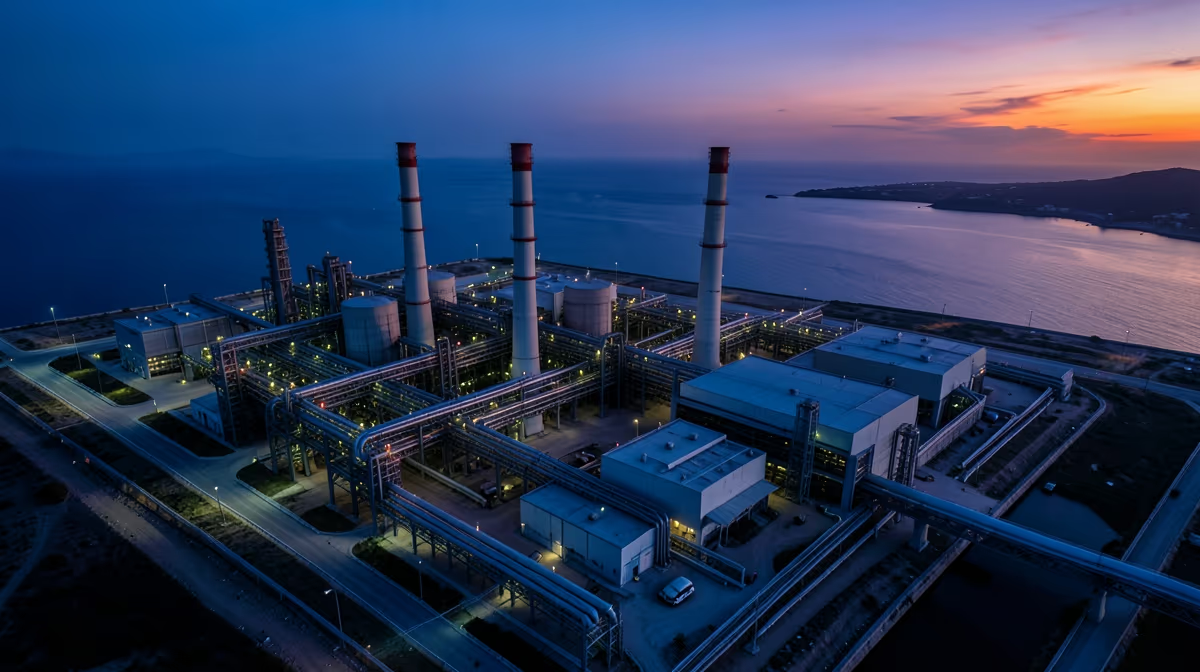
Deep within the volatile landscape of the Persian Gulf, a single industrial facility serves as both a critical heartbeat for a nation’s energy grid and a lightning rod for global strategic anxiety. The Bushehr nuclear power plant remains a focal point for international observers monitoring nuclear proliferation concerns and Iran energy security in a climate of heightening geopolitical tension.
Historical Context and Origins
The story of the facility began in 1975, when the Shah of Iran signed a contract with the German firm Siemens to initiate the construction of a nuclear reactor. However, the project was derailed by the 1979 Islamic Revolution and subsequently sustained significant damage during the Iran-Iraq War. For decades, the site sat as a hollow monument to abandoned ambitions. It was not until 1995 that Russia signed an agreement to take over the construction, completing the reactor unit using Russian technical assistance. The plant finally achieved operational status in 2011, connecting to the national grid after navigating years of international delays and complex sanction-related hurdles.
Understanding the Facility
The Bushehr nuclear power plant is a large energy facility located on the Persian Gulf coast, approximately 10 kilometers south of the city of Bushehr. It is the first and only nuclear reactor currently operational in Iran. The facility utilizes a VVER-1000 pressurized water reactor, a Russian-designed model engineered specifically for civilian power generation, capable of producing approximately 1,000 megawatts of electricity. While it provides a significant portion of the nation’s nuclear-generated electricity capacity, its existence is governed by complex international oversight. The plant operates under the strict gaze of the International Atomic Energy Agency, which conducts regular inspections to verify that all nuclear material remains within the civilian energy cycle.
Geopolitical and Strategic Calculus
The facility acts as a strategic hedge, providing Iran with a legitimate civilian nuclear baseline while simultaneously serving as a complex bargaining chip in international non-proliferation negotiations. Washington views the facility as a Russian-controlled vector of influence, creating a delicate diplomatic balancing act between the desire for regional containment and the reality of managing Moscow’s role in the Middle East. For Iran’s neighbors and the United States, the plant creates a permanent regional security dilemma. Because nuclear technology is dual-use, the infrastructure carries the inherent potential for reprocessed material to be diverted for military applications. This has transformed the site into a 'grey zone' battlefield, where state-sponsored actors reportedly engage in persistent, low-intensity cyber-warfare to degrade Iran's industrial capability without triggering a conventional military escalation.
Economic Infrastructure and Dependency
Beyond the security concerns, the plant represents a deep sunk-cost infrastructure dependency. By relying on Russian maintenance, fuel supply, and technical oversight, Iran has effectively tethered its energy grid to external suppliers. This long-term technological reliance ensures that the facility cannot be viewed in isolation from broader international sanctions. Economically, the plant is designed to support the nation’s growing energy demands, yet it remains a constant touchstone for nuclear non-proliferation talks. Every operational adjustment or fuel shipment must be weighed against the potential for renewed economic pressure, as the dual-use nature of the plant ensures it remains a central factor in any discussion regarding international energy sanctions.
The Surveillance and Monitoring Framework
For the United States and international regulatory bodies, the primary mission is to ensure that Tehran’s claims of civilian energy sovereignty remain tethered to reality. While the U.S. Department of State maintains that it is committed to preventing Iran from acquiring a nuclear weapon, the presence of the International Atomic Energy Agency at the site serves as the only buffer against uncertainty. Routine operations continue with standard monitoring, and despite heightened U.S. rhetoric, the plant maintains its civilian energy status. However, a persistent disconnect remains between the IAEA's findings at the Bushehr site and Western intelligence assessments regarding Iran's broader uranium enrichment activities at other facilities across the country.
Future Projections and Risks
In the immediate 24 to 72 hours, the facility is expected to continue routine power generation, with global focus shifting toward diplomatic signals regarding regional non-proliferation and surveillance activities. Expert predictions suggest the plant will likely maintain its status as long as the fuel cycle remains compliant with IAEA standards. The best-case scenario involves continued adherence to international safety protocols and successful verification of non-military usage. Conversely, the worst-case scenario entails the discovery of unauthorized enrichment activities, which would likely trigger immediate U.S.-led multilateral sanctions and could lead to a significant risk of tactical escalation in the Persian Gulf. The future of the site remains deeply intertwined with the broader fate of the Iran nuclear deal and the fragile stability of the Middle East.
Frequently Asked Questions
Where is the Bushehr Nuclear Power Plant located?
The Bushehr Nuclear Power Plant is located on the coast of the Persian Gulf in southwestern Iran. It is situated approximately 10 kilometers south of the city of Bushehr.
Is the Bushehr Nuclear Power Plant currently operational?
Yes, the Bushehr Nuclear Power Plant is currently operational and connected to Iran's national power grid. It serves as a significant source of electricity for the region and is the first civilian nuclear power plant in the Middle East.
Who built the Bushehr Nuclear Power Plant?
The construction of the Bushehr Nuclear Power Plant was a collaborative effort involving various entities, primarily Russia's state-owned nuclear corporation, Rosatom. While original plans began with German firm Siemens in the 1970s, Russia eventually took over the project to complete the reactor unit.
What type of reactor is used at the Bushehr Nuclear Power Plant?
The facility utilizes a VVER-1000 pressurized water reactor, which is a common Russian-designed reactor model. This technology is designed for civilian power generation and produces approximately 1,000 megawatts of electricity.
Is the Bushehr Nuclear Power Plant under IAEA safeguards?
Yes, the Bushehr Nuclear Power Plant is subject to safeguards and monitoring by the International Atomic Energy Agency (IAEA). These inspections are conducted to verify that the facility is used exclusively for peaceful civilian nuclear purposes.
Why is the Bushehr Nuclear Power Plant a subject of international concern?
The plant is often a point of international discussion due to concerns regarding Iran's broader nuclear program and potential proliferation risks. While the facility itself is intended for energy production, its operations are closely monitored by global powers to ensure compliance with international non-proliferation treaties.
Conclusion
The Bushehr nuclear power plant stands as a testament to the intersection of energy necessity and geopolitical friction. While the facility is confirmed to be providing essential electricity to the Iranian grid, its dual-use technology continues to demand the close attention of the International Atomic Energy Agency. As regional tensions persist, the operational status of the plant serves as a barometer for Middle East stability. The next steps for the facility will be defined by ongoing diplomatic vigilance and the maintenance of rigorous inspection protocols to ensure that Iran’s energy infrastructure remains firmly within the bounds of international non-proliferation standards.


.webp)


.webp)
