
Houthis Face Fierce US Strikes As Red Sea Shipping Crisis Deepens
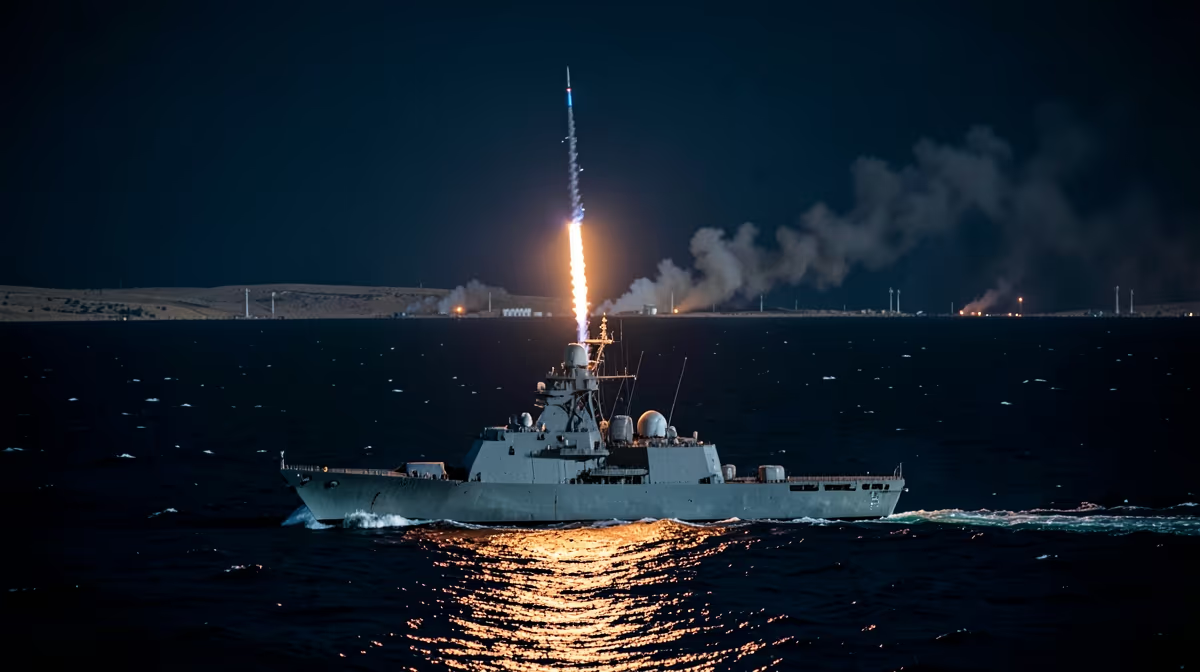
The United States military launched targeted airstrikes against Houthi-controlled radar and missile sites in Yemen on Wednesday, aiming to degrade the militant group's capability to target international shipping lanes in the Red Sea. Beneath the surface of these precision strikes lies a persistent, highly volatile maritime chokepoint threat where houthis continue to disrupt global trade, raising fears of a broader iran war.
The precision strikes, authorized by the Biden administration, represent a direct escalation of military efforts to protect commercial vessels from ongoing drone and ballistic missile attacks launched from Yemen. Over the past several months, the Iran-backed Houthi movement has disrupted global maritime trade by repeatedly targeting cargo ships, prompting the formation of a U.S.-led maritime coalition. Defense officials emphasized that the operation was defensive in nature, designed to restore freedom of navigation and deter further aggression. Despite previous warnings and multilateral condemnations from the United Nations Security Council, the militant group has vowed to continue its campaign in solidarity with Palestinians in Gaza until the conflict ceases. The broader geopolitical implications of the conflict continue to concern international diplomats, who fear the regional fallout could draw in additional state actors. Shipping companies have been forced to reroute vessels around the southern tip of Africa, significantly increasing transit times and shipping costs globally.
Root Causes And Historical Trajectory
The underlying roots of the current maritime confrontation stretch back decades. The Houthi movement emerged from a marginalized Zaidiyya Shia community in northern Yemen, driven by grievances against economic marginalization, political corruption, and perceived Saudi-backed Salafi religious encroachment, which solidified into a resilient anti-establishment ideology. The movement's timeline includes the 2004 outbreak of the Sa'dah insurgency led by Hussein Badreddin al-Houthi against the Saleh regime, followed by the 2014-2015 period when Houthi forces captured Sana'a, prompting the Saudi-led military intervention and regionalizing the conflict. From 2023 to the present, the group has escalated attacks on international shipping in the Red Sea in response to the Gaza war, drawing direct US and allied military retaliation. The rise of the Houthis mirrors the early trajectory of Hezbollah in Lebanon during the 1980s as a localized, aggrieved Shia community movement that successfully weaponized foreign intervention to build a deeply entrenched, state-within-a-state paramilitary apparatus.
Geopolitical And Economic Dimensions
Domestically, the group leverages anti-imperialist and nationalist rhetoric to consolidate authoritarian control over high-population zones in Yemen. Regionally and internationally, they act as a key, highly autonomous node in Iran's Axis of Resistance, gaining asymmetric legitimacy through state-like governance and defiance of Western powers. Control over Yemen's northern population centers allows the Houthis to extract domestic taxation and zakat, while their disruption of Bab el-Mandeb shipping lanes demonstrates leverage over global trade, raising insurance and transit costs to pressure Western economies. This dynamic transforms a localized civil conflict into a global chokepoint security issue, connecting the war in Yemen directly to the broader US-Iran confrontation and the security of international maritime trade routes vital to the global economy. Furthermore, despite heavy US and coalition airstrikes, the Houthi war economy has fostered a lucrative domestic black market in fuel, taxation, and war profiteering that empowers a new class of loyalist elites, creating internal economic incentives for the continuation of hostilities.
Core Facts Of The Crisis
The Houthis, officially known as Ansar Allah, control much of Yemen, including its capital, Sanaa, and the densely populated western regions. They are attacking commercial cargo ships in the Red Sea and Gulf of Aden using drones and ballistic missiles, asserting that their actions are in solidarity with Palestinians in Gaza amid the Israel-Hamas conflict. They have vowed to continue these assaults on international vessels until Israel halts its military operations in the Gaza Strip. In response, the United States has formed a multinational maritime coalition, known as Operation Prosperity Guardian, and launched multiple airstrikes targeting Houthi missile launchers, radar sites, and weapon storage facilities in Yemen. Major shipping companies have been forced to reroute vessels around the southern tip of Africa to avoid the danger. The United States officially redesignated the Houthis as a Specially Designated Global Terrorist group in early 2024. The group receives significant financial, logistical, and military backing from Iran, which supplies them with advanced weaponry, including ballistic missiles, cruise missiles, and loitering munitions.
Global Supply Chain Impact
The Red Sea is one of the world's most important trade routes, carrying about 12 percent of all global commerce through the Bab el-Mandeb strait. Because the Houthis are attacking ships, many cargo companies are forced to take a much longer route around Africa, which delays the delivery of goods, drives up shipping costs, and could eventually lead to higher prices for everyday items like fuel, food, and electronics worldwide. This disruption directly affects consumers globally who buy imported goods, global shipping and logistics companies, international businesses facing higher transport costs, and the civilian population in Yemen caught in the middle of ongoing military conflict. Senior defense officials have maintained a firm stance, stating that military forces will not hesitate to take further action to protect personnel and the free flow of commerce in this critical waterway.
Short Term Outlook And Tactical Forecasts
Over the next 24 hours, analysts expect heightened surveillance and potential defensive US military strikes against Houthi missile or drone sites in Yemen following recent Red Sea shipping threats. Looking ahead to the next 72 hours, the operational landscape is likely to feature continued naval coalition patrols, retaliatory actions by US forces, and official diplomatic statements or warnings issued to Houthi leadership and their backers. Expert projections indicate that the US will maintain a persistent military deterrent posture to protect international shipping while seeking to degrade Houthi offensive capabilities without escalating into a broader regional war. In the best-case scenario, targeted defensive strikes successfully deter further Houthi attacks, allowing commercial shipping to resume normal routes safely through the Red Sea. Conversely, the worst-case scenario involves a major Houthi missile strike hitting a vital US warship or commercial tanker, causing significant casualties and prompting a massive military escalation in Yemen.
Frequently Asked Questions
Who are the Houthis and what do they want?
The Houthis, officially known as Ansar Allah, are an Islamist political and armed movement that emerged from Sa'dah in northern Yemen in the 1990s. They seek greater political power in Yemen and oppose Western influence, Saudi intervention, and Israel, positioning themselves as part of the Iran-aligned Axis of Resistance.
Where do the Houthis operate?
The Houthis primarily operate in Yemen, where they control the capital city of Sana'a and much of the country's densely populated western regions. In addition to controlling domestic territory, they have launched missile and drone attacks targeting commercial shipping lanes in the Red Sea and Gulf of Aden.
Are the Houthis considered a terrorist organization by the US?
Yes, the United States officially redesignated the Houthis as a Specially Designated Global Terrorist group in early 2024. This action was taken in response to their persistent attacks on international commercial vessels and military warships in the Red Sea.
Why are the Houthis attacking ships in the Red Sea?
The Houthis began targeting commercial shipping in late 2023 in what they claim is a show of solidarity with Palestinians in Gaza amid the Israel-Hamas conflict. They have vowed to continue these assaults on international vessels until Israel halts its military operations in the Gaza Strip.
Who supports and funds the Houthis?
The Houthis receive significant financial, logistical, and military backing from Iran, acting as a key partner in Tehran's regional network of allied militias. Iran supplies them with advanced weaponry, including ballistic missiles, cruise missiles, and loitering munitions used in their attacks.
How is the US responding to Houthi attacks?
The United States has formed a multinational maritime coalition, known as Operation Prosperity Guardian, to protect commercial shipping lanes in the Red Sea and Gulf of Aden. Additionally, the U.S. military has conducted numerous airstrikes targeting Houthi missile launchers, radar sites, and weapon storage facilities in Yemen.
Conclusion
United States military forces have conducted confirmed airstrikes against Houthi radar and missile infrastructure in Yemen in response to ongoing maritime assaults that continue to disrupt international shipping lanes and global supply chains. As military patrols and defensive operations persist across the Red Sea corridor, commercial operators navigate extended transit routes around Africa while diplomatic and defense channels monitor potential escalations. Realistic next steps involve sustained naval deterrence, continued coalition surveillance, and targeted defensive measures aimed at safeguarding maritime commerce and mitigating regional security risks.


