
Strait of Hormuz Shipping Crisis Sparks Urgent Security Alert for UK
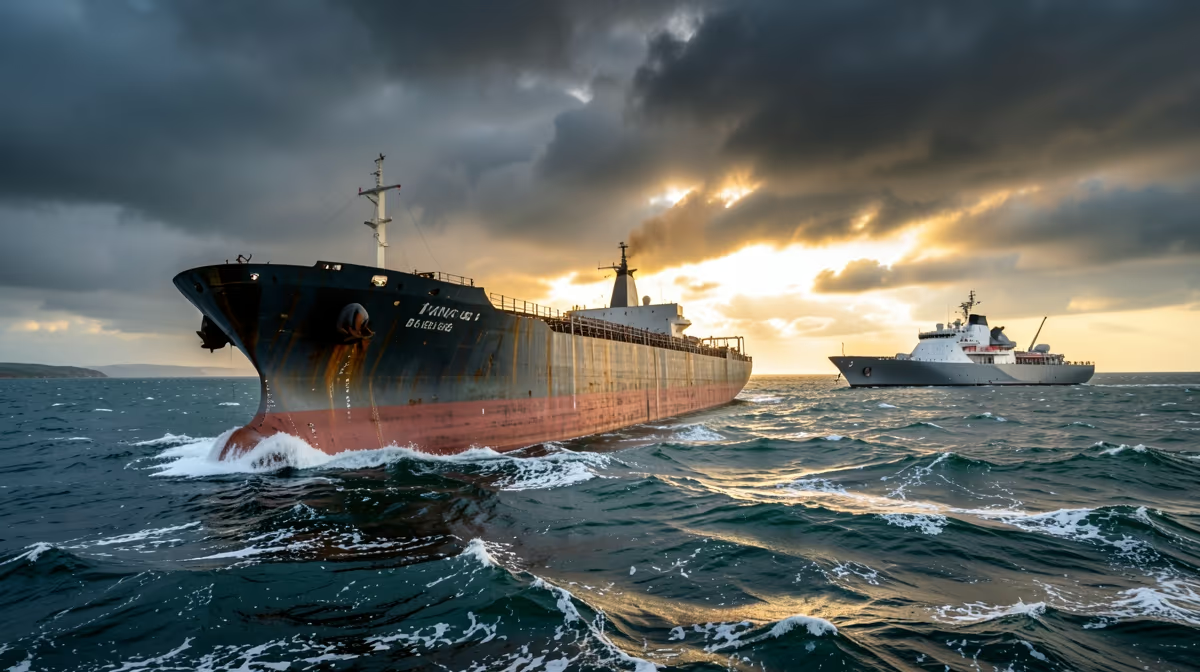
The UK Chamber of Shipping has urged the British government to provide enhanced naval escorts for commercial vessels traversing the strait of hormuz following a dramatic escalation in regional maritime tensions off the coast of Oman. The strait of hormuz remains a critical geopolitical flashpoint as rising tensions in the region threaten vital global trade routes. The vital global trade artery, through which roughly a fifth of the world's petroleum passes, has experienced heightened security concerns after multiple commercial tankers reported electronic interference and direct warnings from regional forces. British maritime authorities have raised the threat level for UK-flagged ships operating in the Persian Gulf and the Gulf of Oman, advising operators to maintain maximum security postures. Shipping firms operating out of British ports are increasingly worried about potential disruptions to energy supplies and rising insurance premiums. The UK Ministry of Defence confirmed that Royal Navy Type 23 frigate HMS Montrose remains stationed in the region to offer reassurance and protection to British-flagged shipping, working alongside international maritime security coalitions. Economic analysts warn that any sustained disruption to traffic in the narrow waterway could trigger immediate spikes in global crude oil prices, directly impacting British consumers at the petrol pump. Industry leaders continue to coordinate daily risk assessments with the Department for Transport to safeguard critical supply chains.
Maritime Security and Regional Pressures
The structural dependence of global energy markets on a single, highly vulnerable maritime chokepoint controlled primarily by Iran sits at the root of the current crisis. For decades, the Strait of Hormuz has been a strategic geopolitical flashpoint due to its critical role in oil transit and ongoing political friction between Western allies and Iran. Historical parallels point directly back to the 1980s Tanker War during the Iran-Iraq conflict, where third-party commercial shipping became collateral damage. The timeline of confrontation includes the 1988 Operation Praying Mantis, the 2019 seizure of the UK-flagged Stena Impero, and now ongoing asymmetric drone warfare and electronic jamming. Tehran leverages its maritime dominance for sanctions relief and regional deterrence, challenging Western and UK naval presence. This creates a flashpoint for US-led maritime coalitions versus Iranian asymmetric warfare, drawing in UK security commitments and energy security strategies. Beyond traditional naval posturing, a hidden angle involves the rapid militarization of commercial maritime cyber-attacks and GPS spoofing disrupting tanker traffic without firing a shot. Commercial shipping operators have reported electronic interference and navigational challenges, prompting the UK Department for Transport and maritime authorities to elevate the security threat level for British-flagged vessels in the area. Stuart McRichmond, a senior maritime security analyst at Lloyd's Register, stated that the Strait of Hormuz remains a critical choke point for global commerce, and current threat levels necessitate a permanent, robust coalition presence to deter any miscalculation at sea.
Understanding the Chokepoint
The Strait of Hormuz is a narrow stretch of water that connects the Persian Gulf with the wider ocean. It is one of the most important shipping routes in the world because a huge portion of the global oil supply travels through it every single day on large tanker ships. Recently, tensions in the Middle East have made this area a major flashpoint, raising fears that oil shipments could be blocked or delayed. For people in the UK, any trouble in this region is watched very closely by governments and businesses. Because the strait acts as a global energy bottleneck, any disruption there can cause oil prices to jump sharply. When oil prices go up globally, it quickly leads to higher costs for everyday items, including the price you pay at the petrol pump and your home heating bills. The waterway is a narrow maritime chokepoint situated between Oman and Iran, connecting the Persian Gulf with the Gulf of Oman and the Arabian Sea. At its narrowest point, the strait is about 21 miles wide, with the shipping lanes in both directions only two miles wide each. This restricted geography makes commercial vessels particularly vulnerable to regional tensions and military blockades. Roughly a fifth of the world's petroleum passes through the strait, and the UK Royal Navy frequently deploys warships to the region to help safeguard British-flagged merchant shipping. These operations aim to ensure the safe and free flow of international trade through the volatile chokepoint. No single nation controls the entire strait, as its waters are shared between the territorial waters of Iran and Oman, though Iran holds a dominant geographic position along its northern coastline.
Economic Consequences and Market Volatility
The economic angle of the crisis centers on severe volatility in global crude oil prices, insurance premium spikes, and inflationary pressures impacting the UK economy. When shipping through this channel is threatened, the price of crude oil rises worldwide, driving up inflation and making the cost of living more expensive for households across the UK. UK motorists, energy consumers, businesses reliant on transport, and global financial markets are directly affected by these shifts. Even the threat of closure can cause immediate spikes in global energy markets. Shipping firms operating out of British ports face growing financial burdens due to rising insurance premiums and operational expenditures. Industry leaders continue to coordinate daily risk assessments with the Department for Transport to safeguard critical supply chains and mitigate British economic inflation. The economic ramifications extend across energy markets, maritime security, British economic inflation, and Middle East foreign policy, underscoring the deep interconnectedness of global trade networks and domestic consumer costs.
Outlook and Projected Scenarios
In the next 24 hours, expectations point toward increased Royal Navy monitoring and diplomatic engagement with regional allies to ensure the safe passage of UK-flagged vessels through the Strait of Hormuz. Looking toward the next 72 hours, the potential implementation of updated maritime threat advisories by the UK Department for Transport remains likely, alongside heightened readiness among British naval assets in the Persian Gulf. Discussions regarding enhanced formal convoy systems and potential updates to international naval deployment mandates remain ongoing between shipping industry representatives and government officials. Expert predictions suggest persisting localized tensions without direct military confrontation, leading to sustained high shipping insurance premiums and heightened operational costs for UK energy imports. In a best-case scenario, successful international de-escalation talks result in the safe passage of commercial vessels and a temporary stabilization of energy transit routes. Conversely, the worst-case scenario entails a miscalculation at sea leading to the detainment of a commercial vessel, triggering emergency military intervention and a sharp spike in global oil prices.
Frequently Asked Questions
Where is the Strait of Hormuz located?
The Strait of Hormuz is a vital waterway situated between Oman and Iran. It connects the Persian Gulf with the Gulf of Oman and the Arabian Sea.
Why is the Strait of Hormuz so important?
This narrow chokepoint is globally significant because a massive portion of the world's petroleum passes through it via tankers. Any disruption here can cause an immediate spike in international oil prices.
How wide is the Strait of Hormuz?
At its narrowest point, the strait is about 21 miles wide, with the shipping lanes in both directions only two miles wide each. This restricted geography makes commercial vessels particularly vulnerable to regional tensions and military blockades.
Can Royal Navy ships operate in the Strait of Hormuz?
Yes, the UK Royal Navy frequently deploys warships to the region to help safeguard British-flagged merchant shipping. These operations aim to ensure the safe and free flow of international trade through the volatile chokepoint.
Who controls the Strait of Hormuz?
No single nation controls the entire strait, as its waters are shared between the territorial waters of Iran and Oman. However, Iran holds a dominant geographic position along its northern coastline.
What happens if the Strait of Hormuz is closed?
A closure of the strait would severely restrict global oil supplies, potentially triggering an energy crisis and soaring fuel costs worldwide. Consequently, major global powers maintain a strong naval presence in the area to deter such actions.
Conclusion
The unfolding situation in the Strait of Hormuz highlights the persistent vulnerability of global energy supply chains and international maritime security. Confirmed developments show that UK maritime authorities have elevated security threat levels for British-flagged vessels following reports of electronic interference and direct warnings from regional forces. The Royal Navy, through assets such as the Type 23 frigate HMS Montrose, continues to monitor the region and offer protection alongside international coalitions. Realistic next steps involve ongoing risk assessments by the Department for Transport, sustained naval monitoring, and continued diplomatic engagement with regional allies to ensure the safe passage of commercial shipping and stabilize energy transit routes.


