
Trump Smithsonian Order Sparks Intense Debate Over National History
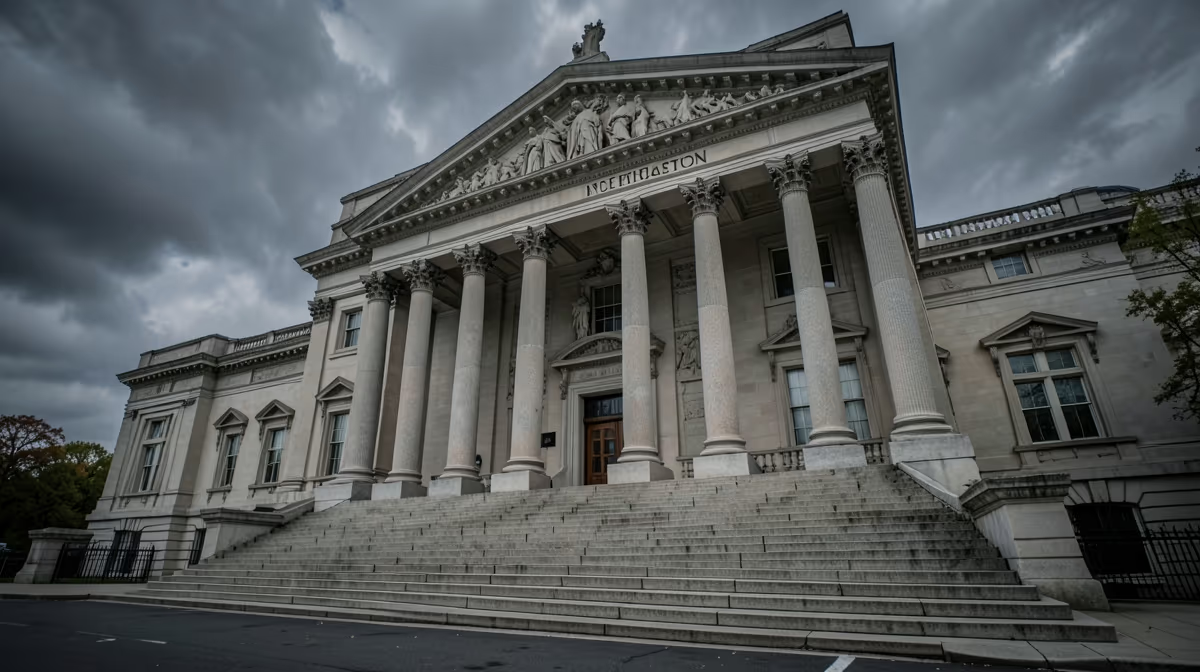
WASHINGTON — President Donald Trump has issued a directive targeting the Smithsonian Institution, warning officials to address what the administration characterizes as biased historical narratives and ideological drift within the nation's premier museum complex. The recent trump smithsonian museum signage order has drawn significant attention from historians and federal officials alike, centering on institutional clashes over cultural heritage preservation and ideological control of federal historical narratives.
The executive order, signed late last week, instructs federal agencies and advisory boards to review current exhibitions and educational programs across the Smithsonian's numerous museums and galleries. According to administration officials, the initiative is designed to ensure that exhibits present a balanced and patriotic view of American history, rather than focusing predominantly on systemic flaws. Critics and museum professionals have immediately pushed back against the directive, arguing that political interference threatens the academic independence and scholarly integrity of the institution. Historians note that the Smithsonian's curatorial decisions have historically been made by subject-matter experts relying on peer-reviewed research and historical artifacts.
The Historical And Institutional Scope
The Smithsonian Institution is a group of museums and research centers administered by the United States government. Historically, it has maintained editorial and academic independence in curating exhibits, though it receives federal funding to operate. President Trump signed an executive order focusing on this institution, requiring a review of museum exhibits and educational content. The stated goal is to promote patriotic education and traditional historical narratives, while critics argue the move threatens the independence and academic freedom of museums.
This order touches on ongoing cultural debates about how American history is taught and remembered. It raises important questions about political influence over public educational institutions and whether museums should remain entirely independent from shifting political agendas. Museum visitors, historians, educators, students, and the millions of Americans who rely on the Smithsonian for cultural education and historical research are directly affected by these shifts.
Political Strategy And Cultural Fallout
The institutional clash over cultural heritage preservation involves the weaponization of cultural heritage as a wedge issue to consolidate populist base support, test executive authority over autonomous federal agencies, and challenge perceived elite biases in public history. By focusing on federal cultural policy, First Amendment rights, and institutional independence, the directive sets up a potential legal and legislative showdown between the executive branch and museum regents. Lawmakers on both sides of the aisle are currently weighing hearings to examine the constitutional boundaries of executive oversight over cultural institutions.
Economic ramifications also loom large, including potential disruption to federal funding allocations, philanthropic donations, and tourism revenue tied to Smithsonian museums, alongside administrative compliance costs for federal cultural institutions. Furthermore, the geopolitical angle involves the erosion of US soft power abroad by signaling domestic instability and political interference in national historical archives, which undermines America's credibility as a champion of institutional independence and free inquiry. Observers note historical parallels to the mid-20th-century political pressure on the Smithsonian and federal arts programs during the McCarthy era, as well as the culture wars of the 1990s over the Enola Gay exhibition. Hidden angles of the directive involve the bureaucratic restructuring of internal Smithsonian vetting committees and the quiet self-censorship of curators aiming to avoid executive retaliation or budget freezes.
Immediate Industry And Legal Response
Media outlets analyze the executive order's implications for federal cultural institutions while legal scholars debate its constitutionality. Advocacy groups prepare legal challenges regarding administrative overreach and potential First Amendment violations. Expert predictions indicate that the order will face immediate court challenges and injunction requests from historical preservation and civil liberties organizations.
In the face of these developments, the Smithsonian has maintained its commitment to independent, scholarly curation and rigorous historical accuracy. Museum officials emphasize that educational labels and contextual markers are developed by expert historians and researchers, allowing them to navigate federal guidance while upholding their mission to preserve and present complex American history objectively.
Future Scenarios And Projections
As the situation unfolds, two distinct trajectories emerge for the institution and its federal overseers. In the best-case scenario, a collaborative dialogue emerges between federal oversight and museum boards to balance transparency without compromising historical integrity. Conversely, the worst-case scenario involves protracted litigation ensuing, leading to frozen funding, institutional paralysis, and deeply polarized public battles over national history.
The specific implementation details of the review process, potential legal challenges from museum advocates, and the congressional response remain active and unfolding stories. As administrative and legal maneuvers continue, federal cultural institutions navigate a delicate balance between executive mandates and long-standing scholarly traditions.
Frequently Asked Questions
What was the executive order regarding Trump and Smithsonian warning signs?
The executive order aimed to address perceived ideological biases in federal institutions, including historical displays. It directed agencies to ensure that interpretive markers or warning signs on federal property adhere to strict neutrality standards. Critics and supporters debated the order's impact on historical education and interpretation within museums like the Smithsonian.
Did Donald Trump issue an executive order about Smithsonian plaques?
Donald Trump signed executive actions focused on promoting patriotic education and reviewing public monuments and federal displays. While these directives broadly targeted federal cultural agencies, discussions often centered on how Smithsonian institutions handle controversial historical context. The orders emphasized a standardized approach to American history across national museums.
What did the Trump Smithsonian order say about warning signs?
The directive emphasized that historical context should not undermine foundational American principles or promote revisionist narratives. It suggested that supplemental warning labels or contextual plaques on exhibits should be carefully reviewed for balance and fairness. Supporters argued this ensured objective storytelling, while opponents feared it restricted academic freedom.
How did the Smithsonian Institution respond to the Trump administration directives?
The Smithsonian maintained its commitment to independent, scholarly curation and rigorous historical accuracy. Museum officials emphasized that educational labels and contextual markers are developed by expert historians and researchers. They navigated federal guidance while upholding their mission to preserve and present complex American history objectively.
Why are warning signs used on historical exhibits at the Smithsonian?
Museums utilize interpretive signs and content warnings to provide modern visitors with essential historical context about difficult subjects. These additions help explain changing social perspectives and the complex realities behind certain historical figures or artifacts. This practice is standard in modern museology to enhance educational engagement.
What was the public reaction to the executive order on Smithsonian exhibits?
The order sparked intense nationwide debate between advocates of traditional patriotic education and defenders of critical historical analysis. Proponents believed federal oversight was necessary to prevent biased interpretations of American heritage in national museums. Conversely, historians and cultural organizations expressed deep concern over potential political interference in museum curation.
Conclusion
President Donald Trump's executive directive targeting the Smithsonian Institution has initiated a complex period of review, debate, and potential legal scrutiny regarding federal cultural policy and institutional independence. While the administration emphasizes the promotion of traditional historical narratives and patriotic education, museum officials, historians, and legal experts continue to defend academic freedom and curatorial autonomy. As advocacy groups prepare legal challenges and lawmakers weigh congressional hearings, the implementation of the order remains a central point of tension between executive oversight and the long-standing scholarly traditions of the nation's premier museum complex.


