
Global Combat Air Programme Faces Major Shift That Changes Everything
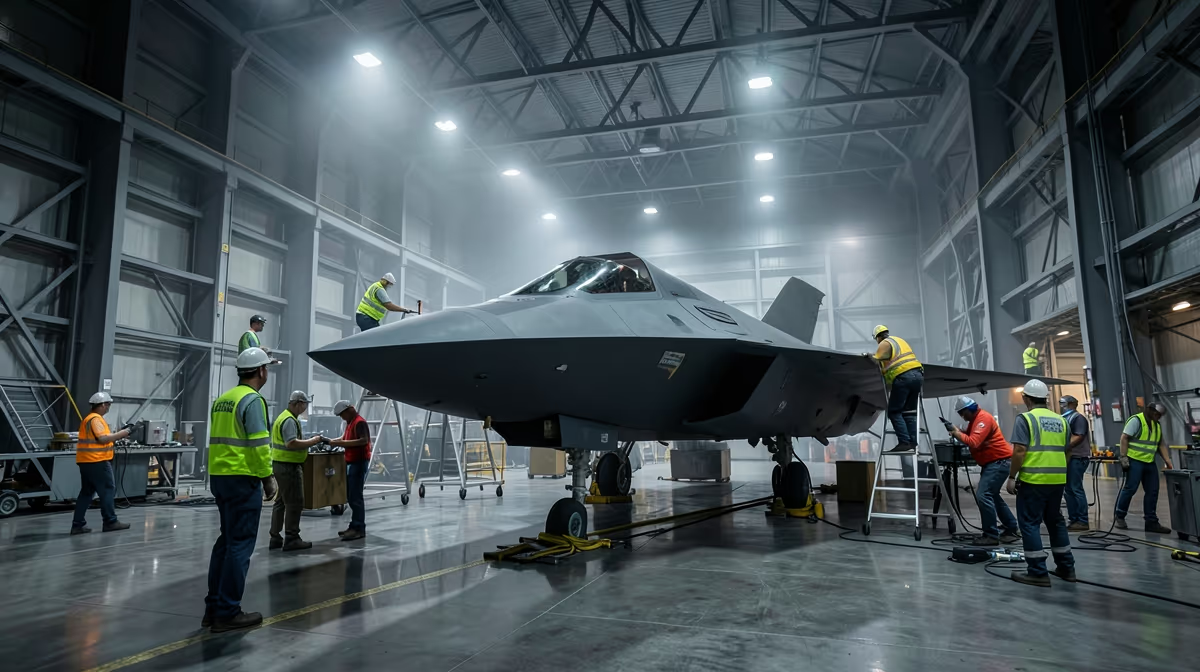
Supersonic stealth networks and the high-stakes economics of next-generation defense manufacturing are fundamentally transforming how allied nations prepare for future skies. Against a backdrop of rising global security threats, the global combat air programme continues to shape the future of military aviation through an unprecedented trilateral partnership between the United Kingdom, Japan, and Italy. Defense ministers from the three partner nations gathered in Tokyo to ratify a historic international treaty, establishing the GCAP International Government Organisation which will oversee the design and delivery of an advanced combat aircraft scheduled to enter active service by the mid-2035 timeframe. This monumental venture merges previous separate national plans, specifically the UK's Tempest fighter jet project and Japan's F-X program, into a single unified effort designed to share sky-high development costs and cutting-edge technology.
What Is The Global Combat Air Programme
The Global Combat Air Programme, often called GCAP, is a major international partnership to build a next-generation fighter jet. The UK is teaming up with Japan and Italy to develop this advanced supersonic warplane, which is expected to enter service in the middle of the next decade. Unlike traditional fighter jets, this new aircraft is designed to be extremely smart, featuring advanced stealth capabilities, hypersonic weapons, and the ability to fly without a pilot if needed. It relies heavily on artificial intelligence and cutting-edge digital technology to help pilots process massive amounts of information during missions. The core nations partnering in the initiative bring together their respective defense capabilities and aerospace industries, including key contractors like BAE Systems, Mitsubishi Heavy Industries, and Leonardo. This international collaboration ensures shared technological expertise and distributed financial investment, creating a vital bulwark for regional defense and allied air superiority.
The Role Of Bae Systems In The Tempest Fighter Jet Development
Work on the program is already underway at facilities in BAE Systems in Warton, Lancashire, where hundreds of engineers are collaborating on the concept and design phase. In the United Kingdom, BAE Systems serves as the lead industrial partner for the air system aspect of the program. Rolls-Royce is the primary partner responsible for developing the advanced propulsion system, while Leonardo UK handles radar and electronic warfare capabilities. MBDA UK is also involved in integrating cutting-edge weapons systems. This collaborative framework represents a significant economic boost for the UK aerospace sector, promising thousands of highly skilled jobs and fostering deep technological sharing between the three allied democracies. The UK-led Tempest fighter jet project was effectively merged into the Global Combat Air Programme when the trilateral agreement was signed, making Tempest the British contribution to the joint venture while incorporating research from the UK Future Combat Air System strategy.
Root Causes And Strategic Geopolitics
The genesis of this massive undertaking stems from the post-Brexit defense industrial strategy necessity and the prohibitive cost of domestic sixth-generation stealth fighter development. Building a modern stealth fighter independently places an unsustainable financial burden on any single national budget, forcing a shift toward multinational risk-sharing akin to historical precedents like the Panavia Tornado and Eurofighter Typhoon, though structured to avoid chronic bureaucratic delays. Politically, the trilateral pact requires a delicate balancing act to maintain UK sovereignty and equal-partner status alongside Italy and Japan, while navigating the persistent risk of junior-partner status to the United States. Geopolitically, the program serves to anchor British security influence in the Indo-Pacific while reinforcing European interoperability and deterrence against near-peer adversaries. Beneath the surface, the enterprise also navigates intense behind-the-scenes industrial sovereignty battles over intellectual property rights between BAE Systems, Leonardo, and Mitsubishi Heavy Industries.
Financial Realities And Industrial Workshare
Despite the strong momentum, the program faces substantial financial and technical challenges. Balancing the complex industrial workshare agreements between three sovereign nations, alongside the immense research and development costs required for next-generation combat aviation, demands rigorous governance as the project transitions from design to physical prototyping. Parliamentary updates and defense committee discussions frequently focus on upcoming funding allocations and supply chain integration for the sixth-generation fighter jet. Budgetary pressures within participating nations could potentially lead to prolonged negotiations over workshare percentages and timeline slippage if economic headwinds intensify. Conversely, seamless integration of national defense industries holds the potential for accelerated prototyping phases and reinforced export interest from allied nations, securing a competitive edge in the global defense market against rival initiatives such as the Franco-German Future Combat Air System.
Near Term Outlook And Expert Projections
In the immediate term, routine diplomatic consultations between the UK, Japan, and Italy continue regarding project milestones and industrial workshare agreements. Expert consensus indicates that the trilateral partnership will maintain steady progress on technical requirements, balancing cost-sharing negotiations while navigating complex technology transfer regulations between the three nations. As the initiative moves forward, ongoing negotiations address potential future partner nations joining the program, alongside final decisions on exact industrial workshare percentages and technology export controls. This meticulous pacing ensures that technical rigor matches political ambition as the coalition builds toward its operational target date.
Frequently Asked Questions
What is the Global Combat Air Programme?
The Global Combat Air Programme is a trilateral international initiative involving the United Kingdom, Japan, and Italy to develop a next-generation sixth-generation stealth fighter jet to replace current aircraft like the RAF Typhoon and Japanese F-2 by the mid-2035 timeframe.
Which countries are involved in GCAP?
The core nations partnering in the Global Combat Air Programme are the United Kingdom, Japan, and Italy, bringing together aerospace industries including key contractors like BAE Systems, Mitsubishi Heavy Industries, and Leonardo.
When will the GCAP fighter jet enter service?
The Global Combat Air Programme aims to introduce the new sixth-generation fighter jet into active service by 2035, an ambitious timeline designed to maintain air superiority against emerging global threats.
Who are the main industry partners in the UK for GCAP?
In the United Kingdom, BAE Systems serves as the lead industrial partner for the air system, Rolls-Royce develops advanced propulsion systems, Leonardo UK handles radar and electronic warfare, and MBDA UK integrates weapons systems.
Is Tempest part of the Global Combat Air Programme?
Yes, the UK-led Tempest fighter jet project was merged into the Global Combat Air Programme as the British contribution to the joint venture, utilizing research from the UK Future Combat Air System strategy.
What is the difference between GCAP and the European FCAS?
GCAP is developed by the UK, Italy, and Japan, whereas the rival European Future Combat Air System project involves France, Germany, and Spain, with both programs proceeding independently.
Conclusion
The formal establishment of the GCAP International Government Organisation through the Tokyo treaty marks a definitive milestone in multinational defense collaboration. By uniting the technical capabilities and industrial might of the United Kingdom, Japan, and Italy, the initiative continues to advance toward its 2035 operational target date. As ongoing diplomatic consultations, parliamentary reviews, and engineering efforts proceed at facilities such as BAE Systems in Warton, the partnership remains focused on balancing complex industrial workshare agreements and funding allocations while navigating the rigorous demands of sixth-generation combat aviation development.


