
Russian Submarine Anti-Drone Defenses Trigger Urgent US Navy Response
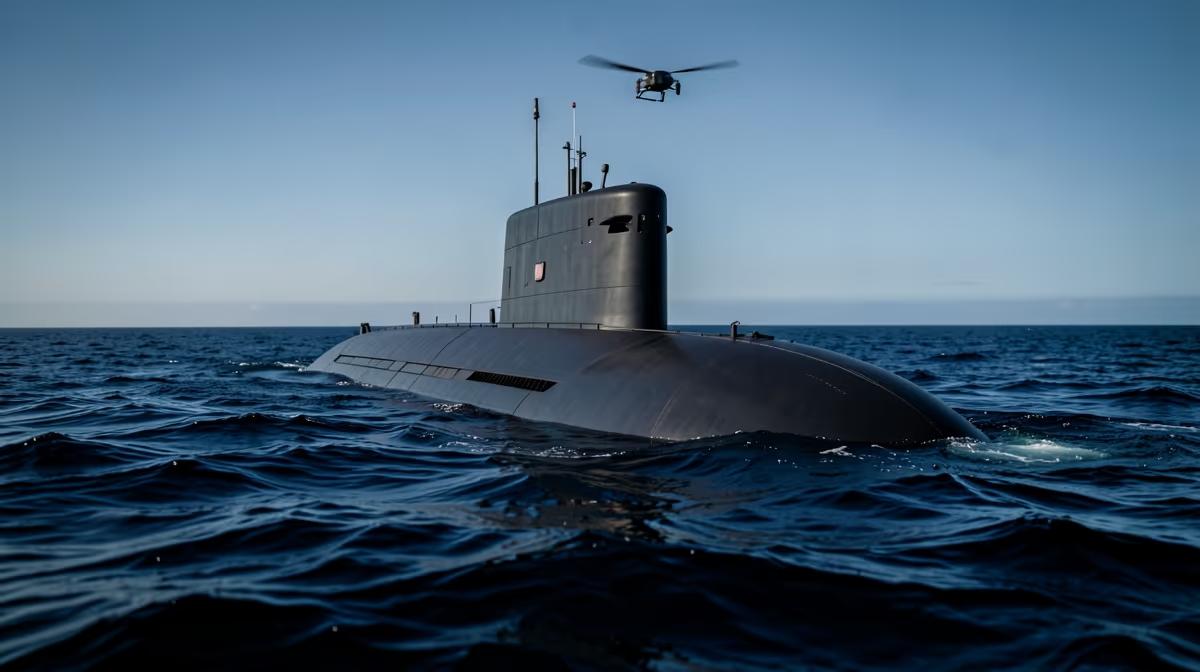
The United States Navy is urgently accelerating the development of advanced anti-drone defenses for its submarine fleet, responding to rapid technological advancements in unmanned underwater and aerial vehicles deployed by strategic competitors like Russia, defense officials confirmed on Tuesday. Military analysts are closely examining recent developments regarding russian submarine anti-drone defenses as naval warfare shifts toward autonomous systems. As unmanned systems proliferate modern maritime battlefields, defense analysts report that Russian naval forces have increasingly focused on integrating counter-UAV and anti-submarine drone capabilities into their submarine fleet. This shift poses a distinct tactical challenge to U.S. undersea dominance, prompting the Pentagon to explore hard-kill and soft-kill countermeasures deployable from submerged platforms.
Historically, submarines relied on deep submergence and acoustic stealth for self-defense, but the advent of loitering munitions and persistent aerial drone patrols near strategic chokepoints has diminished traditional evasion tactics. The U.S. Navy's Naval Sea Systems Command is currently evaluating periscope-depth electronic warfare suites and modified launched munitions capable of neutralizing aerial threats without compromising the submarine's clandestine location. Industry partners have been tasked with developing low-profile, multi-mission sensors that can be integrated into existing mast designs. These systems aim to detect hovering or loitering drones before the submarine is visually or electronically compromised, marking a fundamental shift in undersea warfare doctrine toward active self-defense against multi-domain unmanned threats. According to a senior Pentagon acquisition official speaking on the condition of anonymity, the proliferation of low-cost aerial and surface drones near contested operational areas means our submarines can no longer rely solely on stealth; they must possess organic capability to defend themselves when compromised.
Evolution of Submarine Drone Defense Systems
Russia is currently upgrading its military submarines with new defense systems designed to stop aerial and underwater drones. As modern warfare increasingly relies on cheap, flying and swimming robots to attack targets, traditional military equipment needs new ways to protect itself. These new anti-drone setups likely include specialized electronic jamming devices, rapid-fire guns, and radar systems mounted on the subs to spot and destroy drones before they can deliver explosives. Because submarines are crucial and expensive strategic assets, protecting them from these low-cost threats has become a top priority for the Russian navy. Unmanned aerial and naval drones have dramatically reshaped modern combat, particularly in recent conflicts where cheaper drones have successfully damaged traditional warships and submarines, forcing militaries worldwide to urgently scramble for effective defenses. The rapid proliferation of asymmetric maritime drone technology in Black Sea and Pacific theaters threatens traditional nuclear deterrence paradigms, forcing Moscow to urgently retrofit legacy hull designs with improvised anti-UUV kinetic and electronic countermeasures.
Analyzing Naval Anti-Drone Technology in Modern Fleets
The Kremlin uses naval defense upgrades to project technological resilience and deterrence credibility to domestic audiences and foreign adversaries, masking budgetary constraints in conventional shipbuilding through asymmetric surface and subsurface force multipliers. Diverting specialized defense sector R&D toward counter-drone acoustic jamming suites and close-in defense weapons strains a sanctions-hit federal budget, forcing tradeoffs with strategic bomber modernization and hypersonic missile production lines. Accelerated testing and operational deployment of Russian submarine defense systems near vital US undersea fiber-optic cables and naval choke points intensifies kinetic surveillance rivalries and raises the risk of catastrophic escalation in contested maritime domains. The primary vulnerability of Russian submarines is not direct kinetic attack by drones, but the acoustic signature exposure caused by operating active sonar and jamming pods required to detect silent, low-profile autonomous surveillance craft. Historically, this mirrors the rapid pivot to anti-submarine net and depth-charge innovations during the early phases of the Battle of the Atlantic in World War I, as established naval doctrines scrambled to counter disruptive asymmetric commerce raiding. The timeline of these developments reflects this pressure, starting with Ukrainian maritime drone strikes exposing surface fleet vulnerabilities in the Black Sea in 2022, followed by intelligence reports of design bureaus fast-tracking acoustic countermeasure integration for Borei and Yasen-class submarines in 2023, the deployment of improvised cage armor and acoustic decoy launchers during port calls in 2024, and leading now to the integration of AI-driven optical and acoustic anomaly detection systems for littoral submarine operations near North American maritime approaches.
Key Operational Facts
Russian submarines are receiving new anti-drone defenses to counter modern warfare threats, targeting both flying drones and underwater autonomous vehicles. The upgrades involve electronic jamming equipment and specialized onboard weapons. Drones have proven to be a cheap and effective way to attack high-value military targets, showing how quickly naval warfare is evolving to adapt to unmanned technology. This development highlights a major shift in global military strategy, showing that no military asset is safe from cheap drone technology. For the United States and its allies, it means adversaries are actively adapting their most powerful weapons to survive the future of automated warfare, which could change how naval battles and patrols are conducted. Those affected include US military planners, global naval forces, defense contractors, and geopolitical strategists monitoring modern warfare technology. Verified facts confirm that the U.S. Navy is actively researching anti-drone defense systems for its submarine fleet, Russian naval doctrine increasingly emphasizes unmanned aerial and underwater vehicle integration, traditional submarine evasion tactics are challenged by persistent drone surveillance in strategic chokepoints, and the Naval Sea Systems Command is evaluating both hard-kill and soft-kill countermeasures for submerged platforms. Furthermore, the Pentagon has prioritized funding for counter-UAS technologies specifically adapted for submarine integration in response to foreign naval developments, while specific technological designs, contract awardees, and deployment timelines for the new submarine anti-drone defense suites remain classified and subject to ongoing field testing.
Tactical Outlook and Strategic Projections
Defense contractors and naval analysts in the US will likely review preliminary intelligence reports regarding newly observed Russian submarine anti-drone countermeasures over the next 24 hours. Within the next 72 hours, Pentagon officials and naval warfare experts will initiate briefings to assess potential vulnerabilities in US undersea drone fleets and develop countermeasures. Key players in this dynamic include the US Department of Defense, the Russian Navy, the US Naval Sea Systems Command, and the Defense Intelligence Agency. Impact areas involve undersea warfare strategy, unmanned underwater vehicle development, and US-Russia naval intelligence dynamics. Experts predict the US will accelerate the development of autonomous, heavily armed UUVs capable of neutralizing adversary defense mechanisms without direct human intervention. In a best-case scenario, rapid US technological adaptation neutralizes the new Russian defenses, maintaining strategic deterrence and ensuring the safety of critical undersea infrastructure. In a worst-case scenario, Russian anti-drone systems prove unexpectedly effective, temporarily blinding US undersea reconnaissance and forcing a costly redesign of American unmanned naval doctrines.
Frequently Asked Questions
How are Russian submarines defending against marine drones?
Russian naval forces have increasingly relied on traditional close-in weapon systems and electronic jamming to disrupt incoming uncrewed surface vessels. Additionally, naval base defenses have been upgraded with physical barriers like booms and nets to block drone access. Submarines stationed in vulnerable ports are also utilizing camouflage and smoke screens to evade aerial and maritime drone targeting.
Do Russian submarines have anti-drone weapons?
While Russian submarines are primarily designed for underwater warfare, their crews utilize small arms, heavy machine guns, and specialized grenade launchers when surfaced or in port. Naval infantry stationed nearby provide an extra layer of perimeter security against asymmetric drone threats. However, submarines largely depend on surface escorts and base-level air defense networks for comprehensive protection.
Are Russian submarines vulnerable to Ukrainian maritime drones?
Yes, maritime drones have proven to be a significant asymmetric threat to the Russian Black Sea Fleet, successfully damaging several surface warships and port infrastructure. Submarines are particularly vulnerable when docked in port for maintenance or rearming, as they lack active sonar and maneuverability while stationary. This has prompted the Russian military to relocate high-value naval assets to more secure facilities further from conflict zones.
What countermeasures does the Russian Navy use against aerial drones?
To counter aerial reconnaissance and strike drones, Russian submarines and supporting port facilities employ electronic warfare systems to spoof GPS signals and disrupt control links. Air defense systems such as Tor and Pantsir are frequently deployed near naval bases to shoot down approaching unmanned aerial vehicles. Furthermore, naval personnel are increasingly trained in visual spotting and manual engagement of low-flying drones.
Why are Russian submarine bases adding physical barriers?
Physical barriers such as multi-layered floating booms and heavy metal nets are installed around naval harbors to physically trap or detonate maritime drones before they reach docked submarines. These passive defenses act as the first line of security in congested waters where electronic jamming might fail. They buy crucial reaction time for security forces to neutralize the threat before impact.
How has the war in Ukraine changed Russian submarine defense strategies?
The conflict has forced the Russian Navy to radically reassess port security and adopt a more defensive posture, particularly in the Black Sea. Submarine berths now feature enhanced camouflage, decoy positioning, and integrated drone-detection radar networks. The focus has shifted heavily toward protecting stationary assets from innovative, low-cost asymmetric attacks.
Conclusion
The rapid evolution of maritime drone warfare continues to drive fundamental changes in naval defense strategies for major global powers. With confirmed developments pointing toward accelerated research by the U.S. Navy and ongoing counter-drone integrations within Russian fleet architectures, underwater warfare is entering a new era of technological adaptation. Military planners and defense contractors will proceed with intelligence reviews, capability briefings, and technological testing to address the shifting vulnerabilities of undersea platforms. As these defensive and offensive systems mature, the strategic dynamics of global maritime security will depend on how effectively naval forces adapt to the persistent threat of unmanned systems.


