
Anak Krakatau Volcano Erupts, Grounding Flights and Stunniing Aviation
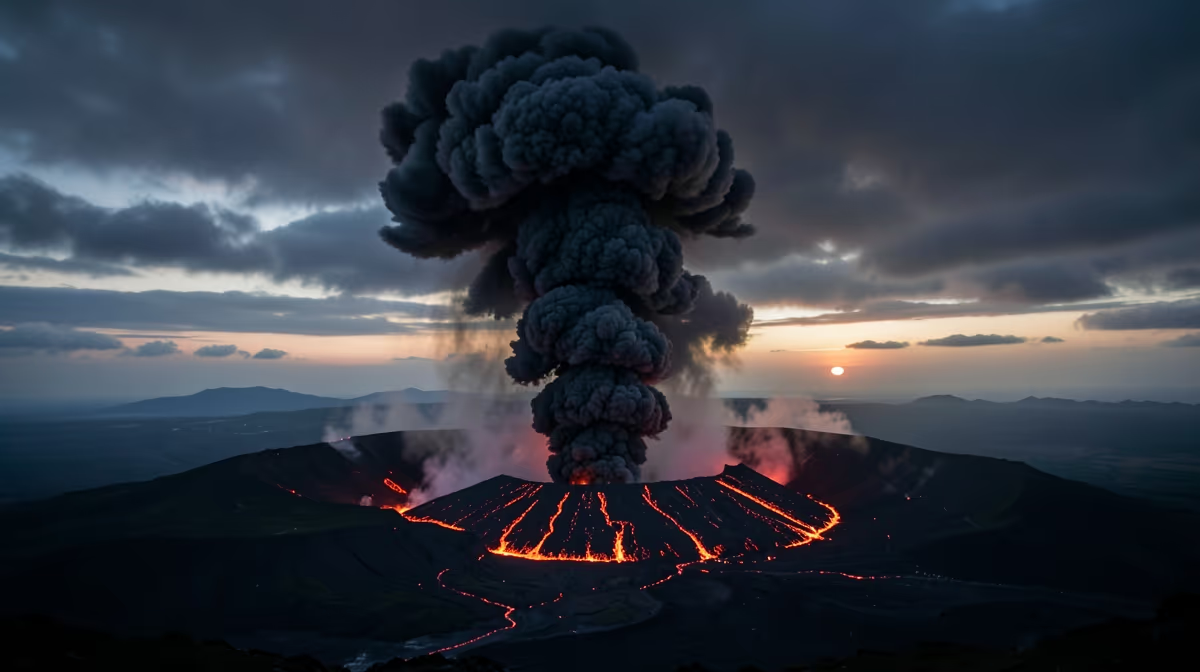
Recent seismic activity has caused the Anak Krakatau volcano erupts event, sending massive ash clouds into the stratosphere. The powerful eruption of Anak Krakatau has triggered significant disruptions in Indonesia, forcing flight cancellations at Jakarta airport and impacting hundreds of flights as ash spreads across the western region of the country.
Flight Cancellations and Aviation Warnings Following the Eruption
According to reports from multiple international news sources, the volcanic activity has not only crippled air travel but also led to the closure of local schools and affected fishing communities in the surrounding area. Ash plumes from the volcano reached staggering heights, soaring 50,000 feet into the atmosphere, creating hazardous visibility conditions and air quality concerns that necessitated immediate emergency protocols from aviation and local authorities.
Over 200 flights have been disrupted or canceled, including operations at Jakarta airport, as airlines scramble to reroute or cancel services avoiding the danger zone. The scale of the eruption has put transportation networks on high alert as officials work to assess the fallout and manage canceled or diverted routes. Transportation hubs, particularly in and around Jakarta, remain heavily impacted as monitoring agencies continue to track the movement of the volcanic ash cloud.
Anak Krakatau volcano erupts, causing Indonesia volcano flights to be grounded and major travel delays.
Understanding the Geological History of Anak Krakatau
Anak Krakatau, which translates to 'Child of Krakatoa', emerged from the sea in the decades following the cataclysmic 1883 eruption of the original Krakatoa volcano. Located in the Sunda Strait between Java and Sumatra, it remains one of Indonesia's most active and closely monitored volcanic systems in a region historically prone to frequent seismic and volcanic activity.
Geological instability within the Sunda Strait due to this highly active volcanic system led directly to the sudden explosive eruption and massive ash plume dispersal. Volcanic eruptions of this scale pose immediate dangers to aviation safety because microscopic glass and rock particles in ash clouds can destroy jet engines. Furthermore, heavy ashfall disrupts regional transportation, daily education, and local economies that rely on fishing and tourism.
Regional Safety Impacts and Community Disruptions
Beyond aviation, the natural disaster has forced authorities to close schools and disrupt local fishing activities to ensure public safety. Emergency responses are underway as communities deal with reduced visibility and potential health hazards from falling ash.
- Over 200 flights hit by cancellations and disruptions
- Major operations grounded at Jakarta airport
- Schools shut down across affected areas
- Local fishing activities halted to ensure public safety
Air passengers traveling to and through Indonesia, local residents and students in western Indonesia, and regional fishermen whose livelihoods are temporarily paused due to the hazards are feeling the immediate effects. Indonesian authorities face immediate scrutiny regarding disaster preparedness, early warning efficiency, and the rapid deployment of emergency measures to safeguard local communities and infrastructure.
Economic and Geopolitical Fallout
Severe disruption to regional air traffic—including hundreds of canceled flights at Jakarta airport—combined with the suspension of local schools and fishing activities, has resulted in immediate commercial losses and logistical bottlenecks. Disruptions to major transit hubs in Indonesia impact international travel routes and supply chains across Southeast Asia, prompting regional monitoring of air corridors.
The prolonged environmental and economic impact on local coastal communities whose livelihoods depend on fishing and tourism may be overlooked amid the focus on capital city flight cancellations. Analysts expect continued flight delays and transport disruptions until ash dispersion models show a clear reduction in volcanic output and improved visibility.
Outlook and Future Operations
Flight cancellations and disruptions at Jakarta airport and surrounding regions are expected to persist as the ash plume from the Anak Krakatau eruption remains a hazard. Schools and fishing activities near the affected areas will likely remain suspended while authorities monitor the situation.
- Flight disruptions and ash spread continue across western Indonesia.
- Authorities assess air quality, volcanic activity levels, and structural safety.
- Operations resume once volcanic output reduces and visibility improves.
Authorities will assess air quality, volcanic activity levels, and structural safety to determine when it is safe to resume normal flight operations, reopen schools, and lift restrictions on coastal and fishing activities. In a best-case scenario, volcanic activity rapidly subsides, allowing air traffic to resume smoothly within days and resulting in minimal long-term disruption to local communities. Conversely, prolonged explosive activity leads to extended airspace closures, severe economic impacts on regional tourism and travel, and prolonged displacement or safety concerns for local populations.
Frequently Asked Questions
What happened with the Anak Krakatau volcano in Indonesia?
The Anak Krakatau volcano recently erupted, sending a massive ash plume soaring 50,000 feet into the air. This significant volcanic activity caused widespread ash to spread across western Indonesia.
Why does the Anak Krakatau eruption matter for travel?
The eruption has significantly disrupted transportation, leading to the cancellation of hundreds of flights, including operations at Jakarta airport. Authorities have had to halt travel to ensure safety as thick ash clouds pose severe risks to aviation.
Who is affected by the volcanic eruption in Indonesia?
Local residents, students, and workers in western Indonesia have been directly impacted by the disaster. In addition to flight cancellations, officials ordered schools and fishing activities to shut down due to the hazardous ash fall.
What is the background of the Krakatau volcano?
Anak Krakatau, which translates to 'Child of Krakatoa', is a notoriously active volcanic island in Indonesia that formed in the caldera of the legendary Krakatoa. It has a history of periodic eruptions that frequently trigger regional alerts and aviation warnings.
How many flights were disrupted by the Anak Krakatau eruption?
Over 200 flights were hit by the disruptions as airlines scrambled to reroute or cancel services avoiding the danger zone. Major airports like Jakarta had to cancel numerous departures and arrivals due to poor visibility and ash hazards.
What happens next following the volcanic eruption?
Emergency services and aviation authorities will continue to monitor the volcano's activity levels and wind patterns to determine when it is safe to resume flights. Schools and local businesses will remain closed until cleanup efforts progress and officials give the all-clear.
Conclusion
The unexpected eruption of the Anak Krakatau volcano has severely impacted western Indonesia, resulting in widespread flight cancellations at Jakarta airport, suspended educational activities, and halted coastal operations. As emergency management agencies and aviation authorities continue to monitor ash dispersion and volcanic stability, normal operations remain paused until safety can be definitively verified.
Sources
- Indonesia cancels flights at Jakarta airport as Anak Krakatau volcano erupts — The Hindu
- Indonesia: Flights canceled as Anak Krakatau volcano erupts — dw.com
- Indonesia’s volcanic eruption halts flights, schools, fishing — CNN
- Anak Krakatau eruption halts Jakarta flights as ash spreads across western Indonesia — India Today
- Krakatau volcano erupts in Indonesia: 209 flights hit, schools shut as ash plume soars 50,000 feet — timesofindia.indiatimes.com


