
Option Traders Brace for Volatility Surge as AI Jitters Mount
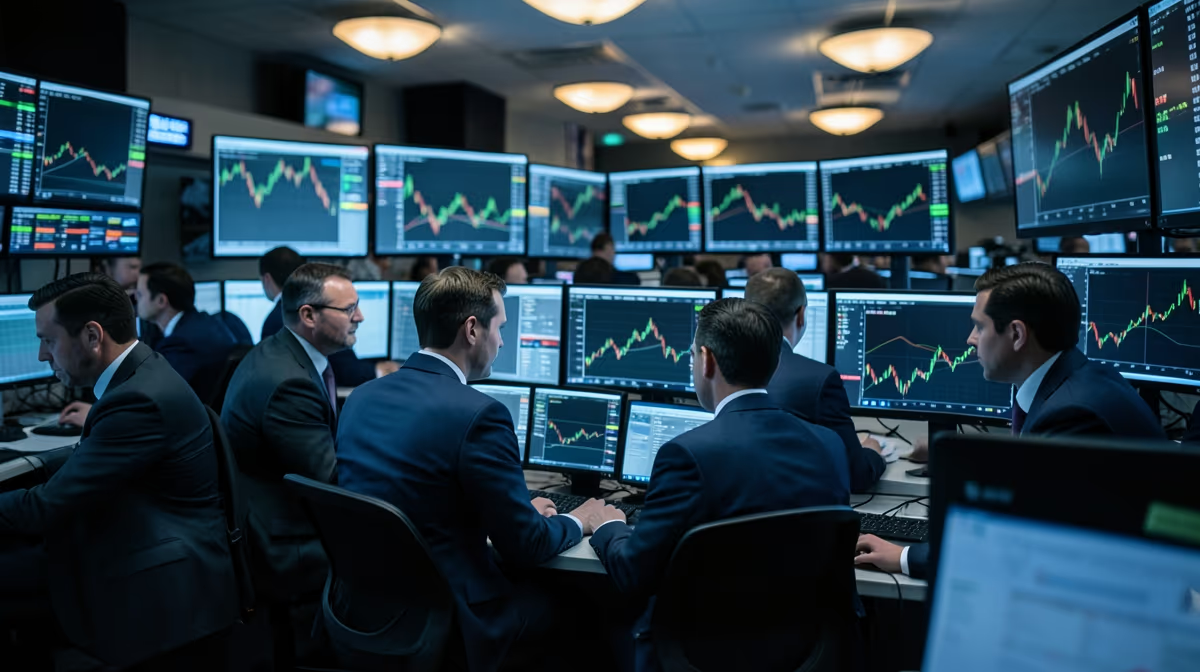
A sudden fracture in market calm has sent institutional desks racing for cover, turning derivative exchanges into a battleground over technology valuations. As artificial intelligence stocks face unexpected pressure, option traders brace for volatility surge as AI jitters jolt market stability across global exchanges.
Option traders are aggressively bidding up downside hedges and driving a surge in the VIX volatility index as artificial intelligence jitters mount ahead of high-stakes megacap corporate earnings reports.
The shift marks an abrupt end to weeks of relative quiet. Heightened anxiety on Wall Street has pushed market participants to hedge aggressively against sharp equity declines, reflecting acute nervousness that the vast capital expenditures sustaining the artificial intelligence rally may not yield the near-term monetization investors demand.
The Mechanics Behind the Volatility Spike
The immediate catalyst driving trading floors centers on an aggressive scramble for downside hedges. Institutional investors and global stock traders have focused heavily on purchasing defensive options contracts, effectively driving up the cost of portfolio protection.
This surge in demand has triggered a sharp upward move in the CBOE Volatility Index, Wall Street's benchmark fear gauge. Market participants were left vexed following a volatile late-week session on Friday, characterized by intense bouts of fear that prompted heavy turnover across volatility products.
A massive scramble for downside hedges has fueled a notable surge in the VIX volatility index ahead of upcoming megacap earnings reports.
The sudden rise in the VIX reflects structural positioning across options markets. While the fear index spiked as traders rushed to purchase protective puts, underlying trading dynamics reveal that the move is not merely speculative pessimism. Rather, it represents an imperative among portfolio managers to insulate balance sheets against sudden drawdowns in technology bellwethers.
Why AI Jitters Are Spurring a Massive VIX Surge
At the core of the market dislocation lies mounting scrutiny over the artificial intelligence sector. Rapid advancements in artificial intelligence have driven massive capital expenditures by megacap tech firms over recent quarters. This persistent spending has sparked sudden market jitters regarding valuation sustainability, future monetization, and systemic concentration risk across major indexes.
| Timeline Period | Market Activity and Structural Drivers |
|---|---|
| Late 2025 to early 2026 | Accelerating corporate investments in artificial intelligence infrastructure heighten market concentration. |
| Mid-October 2026 | Wall Street experiences sudden jitters, triggering a scramble for downside protection and a notable VIX surge ahead of megacap earnings. |
| Current Horizon | Option traders brace for sustained volatility as markets weigh upcoming earnings reports against broader macroeconomic signals. |
The tension between extensive infrastructure deployment and commercial payoffs is now coming to a head. Because a select group of tech giants commands an outsized share of total market valuation, any wobble in corporate sentiment or forward guidance threatens to pull broader indexes lower.
Macro Crosscurrents and Cross-Asset Signals
The options market is not moving in isolation. Equity derivatives desks are actively tracking broader market signals, balancing volatility spikes against developments in fixed income and commodities.
- Financial analysts are monitoring critical market signals across the VIX, bonds, and crude oil to assess macro stability.
- Cryptocurrency markets provided an alternative perspective over the weekend, where specific bitcoin trades suggested that the acute fear witnessed on Friday could begin to fade by early in the week.
- Commodity fluctuations, particularly in crude oil, are adding layers of complexity to corporate earnings expectations across industrial and tech sectors alike.
These cross-asset signals indicate that while derivative markets are experiencing extreme pricing pressure, broader liquidation has not become uniform across all alternative risk assets.
Institutional Squeeze and Risk-Management Realities
An analytical assessment of the options market reveals a distinct hidden driver behind the recent spike in implied volatility. The rapid movement across volatility indices may not solely reflect pure fundamental pessimism regarding artificial intelligence technology.
Instead, market structure indicates an institutional squeeze. Institutional portfolio managers are frequently bound by strict risk-management mandates that trigger mandatory hedging when portfolio concentrations or asset volatility breach predefined limits. When major technology equities experience sharp pricing jolts, these mandates force managers into buying expensive defensive options positioning, regardless of cost.
This dynamic creates an artificial amplifier. The aggressive purchasing of protective options drives the fear index higher, which in turn forces additional automated hedging, tightening conditions for participants who had previously left portfolios unhedged.
Economic Stakes and Broader Systemic Impact
The implications of this derivatives scramble extend well beyond active trading desks. Because mega-cap technology corporations represent a dominant share of standard equity indexes, shifts in tech sentiment reverberate across the broader real economy.
Everyday retirement accounts, mutual funds, and pension plans maintain heavy allocations in these foundational technology leaders. Consequently, sudden market jitters and sharp swings in tech valuations directly threaten the perceived financial security and capital preservation of millions of individual investors.
Furthermore, historical parallels illustrate why market observers treat this development with gravity. The current dynamic mirrors aspects of the dot-com era of the late 1990s, where soaring expectations and heavy capital expenditure in revolutionary infrastructure preceded sharp market reassessments, sudden reassessments of corporate spending, and intense volatility surges.
Geopolitical Pressures and Regulatory Scrutiny
The intersection of technology valuations and public markets is also shaped by external structural forces. The global race for artificial intelligence supremacy has forged intricate cross-border supply chain dependencies. Domestic technology valuations remain directly tied to international semiconductor manufacturing capacities and ongoing geopolitical tensions.
Simultaneously, political and regulatory pressures are rising. Regulatory scrutiny targeting dominant artificial intelligence players intersects with financial market instability. Policymakers are increasingly monitoring how potential corrections within the technology sector could cascade into broader consumer retirement savings and jeopardize wider institutional stability.
Near-Term Trajectory: The Next 24 to 72 Hours
Market participants face a critical window as corporate disclosures begin to test current valuations against operational realities.
Next 24 Hours
Option traders are expected to continue bracing for heightened market volatility as artificial intelligence jitters persist. Desks will remain heavily focused on digesting the ongoing fallout from the recent VIX surge and managing their downside hedging exposure.
Next 72 Hours
Over the subsequent days, markets will directly navigate unfolding megacap earnings reports. Investors will evaluate whether the recent spike in fear and protective hedging will subside or sustain further market turbulence. Analysts expect option markets to remain highly sensitive to artificial intelligence sentiment shifts, keeping downside hedging elevated in the near term.
Potential Scenarios
In a best-case scenario, artificial intelligence-related market jitters quickly fade as calming signals and robust numbers emerge from megacap earnings, allowing the VIX to stabilize and volatility to subside in an orderly fashion.
Conversely, in a worst-case scenario, persistent anxieties surrounding artificial intelligence spending trigger an aggressive scramble for downside protection, driving a sustained volatility surge and a broader equities sell-off ahead of major corporate reports.
Frequently Asked Questions
Why are option traders bracing for a volatility surge?
Option traders are preparing for increased market volatility driven by growing AI jitters and widespread anxiety ahead of upcoming mega-cap earnings reports. This uncertainty has triggered a sudden scramble for downside hedges across the broader market.
What caused the recent spike in the VIX volatility index?
The VIX surged as investors rushed to protect their portfolios against potential market downturns fueled by artificial intelligence sector concerns. Wall Street experienced intense bouts of fear on Friday, prompting heavy trading in volatility products.
Who is most affected by the current market jitters?
Equity investors, option traders, and those heavily exposed to mega-cap technology stocks are feeling the direct impact of these sudden market jolts. Portfolio managers are actively reassessing risk as AI-related sentiment shifts unpredictably.
Will the market fear fade soon?
While Wall Street experienced a major freak-out heading into the weekend, some Bitcoin and volatility trades suggest that the acute panic could begin to subside by Monday. However, lingering uncertainty surrounding upcoming corporate earnings keeps traders on edge.
What role do downside hedges play in this market environment?
Traders are aggressively purchasing downside protection options to shield their portfolios from sharp equity declines driven by tech sector volatility. This heavy demand for hedging instruments directly contributes to the rising VIX levels.
How are major upcoming events influencing trading strategies?
The convergence of artificial intelligence sector anxiety and high-stakes mega-cap earnings announcements has forced market participants to rethink their positions. Traders are closely monitoring critical signals from bonds, crude oil, and the VIX to gauge the next market direction.
Conclusion
Financial markets stand at an inflection point where artificial intelligence spending expectations collide with derivative market realities. The confirmed scramble for downside protection has elevated the VIX to center stage, leaving market participants heavily fortified against tech-led declines ahead of megacap corporate reports. As earnings announcements arrive, the performance of major technology leaders and macro signals from bonds and crude oil will determine whether this defensive surge marks a temporary precaution or the beginning of an extended reassessment across global equities.
Sources
- Options Action: Traders are vexed by VIX — CNBC
- Option Traders Brace for Volatility Surge as AI Jitters Jolt Market — Bloomberg.com
- Wall Street freaked out Friday, but VIX and bitcoin trades say the fear may fade Monday. — CoinDesk
- VOL REPORT: Scramble for Downside Hedges Fuels VIX Surge Ahead of MegaCap Earnings — Traders Magazine
- VIX, Bonds and Crude Oil: Tuesday’s Critical Market Signals — Investing.com
- Scramble For Downside Hedges Fuels VIX Surge Ahead Of MegaCap Earnings — Seeking Alpha


