
US Pending Home Sales Plunge as Unprecedented Freeze Hits
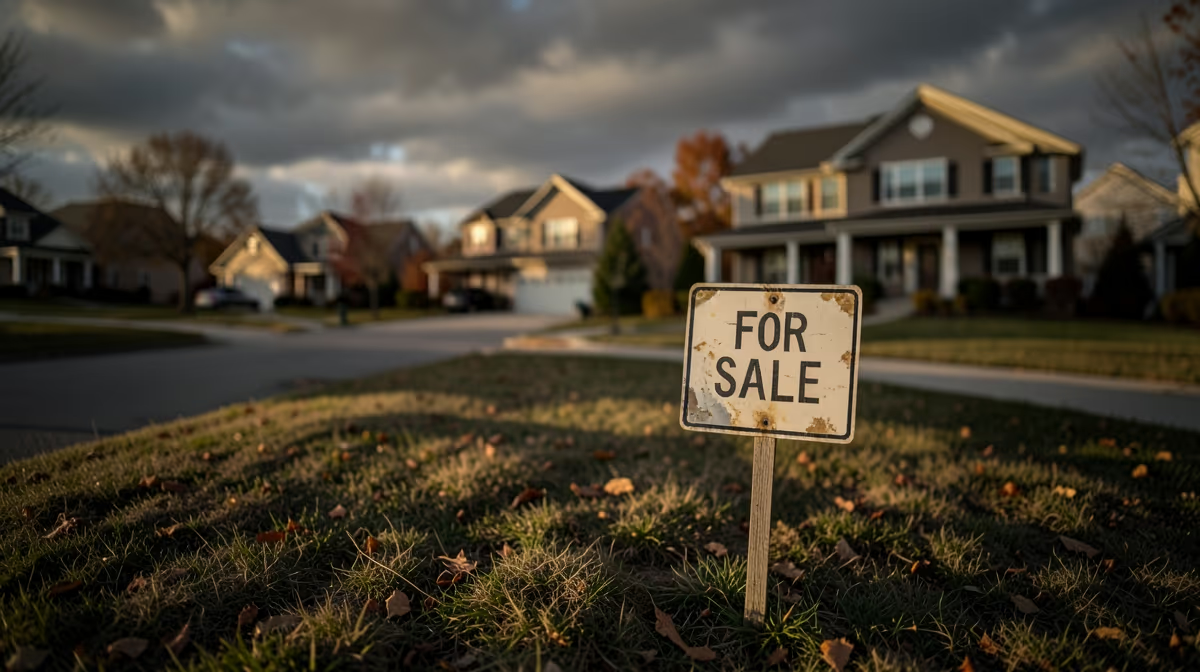
The American residential property market has ground to an unprecedented standstill, trapped between decades-high borrowing costs and an escalating affordability crisis. US pending home sales have dropped to a historic low as surging mortgage rates continue to pressure the real estate market, leaving prospective purchasers sidelined and forcing existing contracts to collapse before closing.
The convergence of multi-decade high borrowing costs and near-record contract cancellations has dragged US contract signings to a twenty-five-year low, paralyzing homebuilders and locking out prospective buyers.
The sudden freezing of contract signings marks one of the most severe contractions in residential real estate activity seen in modern history. Prospective homeowners are discovering that purchasing a home is more difficult and substantially more expensive than it has been in decades. As borrowing costs climb, the financial mechanics of purchasing a primary residence have broken down, producing an acute gridlock where transactions cannot clear and existing homeowners refuse to relinquish the lower interest rates secured during prior years.
Historic Contraction in Contract Signings
Market data across major financial indices confirms that contract signings for existing properties have plunged to levels not seen in a quarter of a century. The decline in pending sales—typically a reliable forward indicator of completed transactions in subsequent months—reflects a market reeling from aggressive macroeconomic shifts. Buyers who were actively shopping for homes only weeks ago have fled the market in significant numbers, unable to reconcile escalating monthly payments with household budgets.
The scale of the downturn has surpassed previous cyclical slowdowns, matching or exceeding historical milestones of market distress. Across the nation, prospective purchasers are walking away from negotiations or finding that their qualification thresholds evaporate overnight when rates tick upward. This rapid retreat has turned standard residential transactions into high-risk endeavors, where deals frequently disintegrate prior to final settlement.
Pending home sales have dropped to a 25-year record low as surging mortgage rates cause buyers to flee the market and cancel sales at near-record rates.
Compounding the drop in newly signed agreements is a dramatic spike in transaction terminations. Homebuyers are canceling existing purchase agreements at near-record rates. Even after reaching agreed terms and entering escrow, purchasers are exercising contract contingencies, forfeiting earnest money, or simply walking away due to the compounding financial stress imposed by elevated borrowing rates and lingering economic uncertainty.
Builder Sentiment Hits Multi-Year Lows
The ripple effects of buyers fleeing the market have moved swiftly from secondary property exchanges directly into the construction sector. U.S. home-builder sentiment has plunged to a fourteen-year low, highlighting severe distress among developers who find themselves unable to gauge future buyer demand. As customer foot traffic vanishes and sales conversion rates deteriorate, builders are dramatically revising their outlook for future residential starts.
| Housing Indicator | Historical Marker | Market Condition |
|---|---|---|
| Pending Home Sales | 25-Year Record Low | Severe transaction contraction |
| Builder Sentiment | 14-Year Low | Sharp developer pessimism |
| Contract Cancellations | Near-Record High | High buyer retreat in escrow |
Developers are caught in an operational squeeze. With construction financing remaining expensive and retail demand collapsing under elevated mortgage rates, the economic incentive to bring new residential units to market has sharply diminished. Rather than expanding footprints or breaking ground on expansive suburban developments, builders are scaling back expectations, slowing production cycles, and attempting to manage inventories that risk sitting unsold on corporate balance sheets.
The drop in builder confidence mirrors the broader freeze across the housing ecosystem. Construction firms, material suppliers, and specialized subcontractors face direct exposure to this contraction. Because residential construction serves as a fundamental pillar of domestic economic production, the retreat in builder sentiment highlights vulnerabilities that extend far beyond individual suburban subdivisions.
The Affordability Crisis and Generational Divide
The current housing dynamic has exposed an acute generational divide across the country. Purchasing a residential property today feels increasingly painful, creating an economic chasm between younger prospective buyers and older generations whose home purchases occurred under fundamentally different economic conditions. The compounding pressure of high listing prices and elevated mortgage rates has erected a formidable barrier for first-time buyers attempting to enter the property ladder.
For decades, homeownership served as the standard foundation for building middle-class generational wealth. In the current environment, everyday families and first-time buyers are largely priced out of the transaction process entirely. Even households with stable incomes and disciplined savings find that current monthly financing obligations require an unprecedented share of their monthly earnings. This reality has driven a widespread feeling of alienation among entry-level buyers, whose purchasing power has deteriorated far faster than wage growth can compensate.
The practical impact is visible in household behavior nationwide. Relocating families are postponing moves, younger workers are remaining in rental properties for extended periods, and real estate professionals are seeing their client pipelines dwindle. What was once considered a standard life milestone has transformed into an unattainable financial burden for millions of prospective owner-occupants.
Regional Disruption from California to Local Markets
While the housing slowdown is national in scale, its severity manifests sharply in specific regional property markets. Markets across California, including San Diego, are recording notable drops in total home sales as localized affordability limits are breached. High-cost states that already suffered from elevated baseline home prices are experiencing the sharpest operational drag, as even marginal increases in mortgage rates price out thousands of prospective borrowers.
In western metro areas, where entry-level single-family homes routinely trade at premium valuations, the surge in financing costs has completely unanchored local real estate velocity. Agents report empty open houses, prolonged days on market, and sudden contract terminations that leave sellers with few alternatives. Regional housing markets that once maintained reliable momentum through competitive bidding and continuous transaction turnover are now navigating stagnant inventory and hesitant buyers.
This regional deceleration demonstrates that localized housing economies cannot easily decouple from macroeconomic policy decisions. As borrowing costs remain high, geographic areas that previously relied on high-volume real estate turnover are seeing sales volumes drop precipitously, drying up local brokerage activity, escrow transactions, and associated ancillary services.
Macroeconomic Roots and Historical Parallels
The fundamental root cause behind this historic housing freeze is the Federal Reserve's aggressive monetary policy tightening campaign, designed to combat persistent inflation across the broader economy. Central bank interest rate hikes have directly pushed mortgage rates to multi-decade highs, deliberately cooling aggregate demand by restricting credit creation.
This policy trajectory draws strong historical parallels to the early 1980s Volcker shock, when aggressive Federal Reserve monetary tightening curbed runaway inflation at the cost of freezing the residential housing market and driving mortgage rates to unprecedented peaks. Just as occurred four decades ago, current monetary intervention has successfully chilled transaction volume, but it has created structural imbalances across the property sector that resist straightforward resolution.
A central element of this modern distortion is the chronic lock-in effect. Millions of existing homeowners who secured historically low mortgage rates during previous years refuse to sell their homes. Listing their properties would require surrendering an advantageous interest rate in exchange for a new loan at multi-decade highs. Consequently, existing homeowners are staying put, starving the market of inventory and creating a structural supply drought that traditional interest rate cuts alone may not quickly remedy.
``` Macroeconomic Tightening Timeline: 1. Inflationary pressures prompt aggressive monetary tightening and mortgage rate surges. 2. Home-builder sentiment drops and contract cancellations spike to near-record levels. 3. US pending home sales sink to a 25-year record low as buyers exit the market. ```
Political and Global Implications
The residential housing freeze is no longer just a financial statistic; it has evolved into a central political flashpoint. Housing affordability represents a core driver of voter discontent, placing immense pressure on the administration to address mounting cost-of-living concerns. Policymakers face the delicate challenge of trying to improve housing access and ease affordability pressures without injecting stimulus that could reignite broader inflationary forces.
Geopolitically and macroeconomically, the implications of a stalled American property sector are profound. When domestic real estate liquidity freezes, consumer purchasing power erodes, slowing overall domestic economic expansion. A prolonged slowdown in housing-related spending—ranging from construction materials to home furnishings and durable goods—drags on national output. In turn, softer domestic growth influences global investor confidence and reshapes international capital allocation strategies as global funds assess the resilience of the wider economy.
Outlook for the Housing Market
The immediate trajectory of the residential real estate market remains tied to interest rate behavior and consumer resilience. Over the next 24 hours, market commentary and analysis will continue to digest the drop in pending sales to record lows alongside the surge in borrowing costs. Over the next 72 hours, financial analysts are expected to deliver further assessments detailing buyer cancellation rates, multi-year lows in builder sentiment, and regional housing contractions across various metro areas.
Key market players—including homebuyers, corporate homebuilders, and real estate market analysts—remain focused on monetary policy signals. Analysts anticipate ongoing downward pressure on housing transactions as long as mortgage rates remain elevated, leading to persistent cancellation rates and cautious buyer behavior.
In a best-case scenario, mortgage rates will stabilize or slightly decline, providing tangible relief to prospective buyers and preventing further severe drops in pending home sales. Conversely, the worst-case scenario would see surging mortgage rates persistently deter buyers, causing contract cancellations to climb even higher and deepening the slump in home-builder sentiment and regional transaction volumes.
Frequently Asked Questions
Why did US pending home sales fall to a record low?
Pending home sales dropped significantly as a direct result of surging mortgage rates. This sharp increase in borrowing costs has priced many potential buyers out of the housing market.
What is the current state of the US housing market according to recent reports?
Recent data from financial sources indicates that pending home sales have sunk to historic lows, matching a 25-year low in some tracking metrics. Furthermore, home-builder sentiment has also plummeted to a 14-year low as buyers increasingly retreat.
Are homebuyers currently canceling purchases?
Yes, homebuyers are canceling existing sales agreements at near-record rates. High mortgage rates and economic uncertainty are forcing many buyers to back out before closing transactions.
How are high mortgage rates affecting regional housing markets like California?
Regional markets are experiencing clear downturns due to rising borrowing costs. Areas across California and San Diego are seeing notable drops in overall home sales as affordability declines.
Why is buying a house currently so difficult for younger generations?
Purchasing a home has become exceptionally painful compared to past decades due to the compounding pressure of elevated home prices and high mortgage rates. This combination creates a stark contrast to the housing conditions experienced by older generations.
What does the drop in pending home sales mean for the future of the housing market?
The steep decline in pending sales signals a cooling housing market with reduced buyer demand and cautious builders. If mortgage rates remain elevated, transaction volumes are likely to stay depressed in the near term.
Conclusion
US pending home sales have plunged to a 25-year record low as surging mortgage rates severely restrict affordability, driving near-record contract cancellations and sending home-builder sentiment to a 14-year low. From statewide markets like California to local areas such as San Diego, the contraction has produced a deep disconnect between housing costs and buyer purchasing power. With the market locked in a structural freeze reminiscent of the 1980s, industry analysts and key players will monitor whether borrowing costs stabilize or continue to depress transaction activity across the broader economy.
Sources
- Homebuyers are canceling sales at near-record rates — Yahoo Finance
- US pending home sales fall to record low as mortgage rates surge — Financial Times
- Pending home sales sink to 25-year low as buyers flee high mortgage rates — MarketWatch
- Why buying a house feels so painful now — and your parents may not understand — The Washington Post
- U.S. Home-Builder Sentiment Sinks to 14-Year Low — WSJ
- Home sales drop across California and San Diego as mortgage rates rise — cbs8.com


