
US Pending Home Sales Collapse to Levels Never Seen in Decades
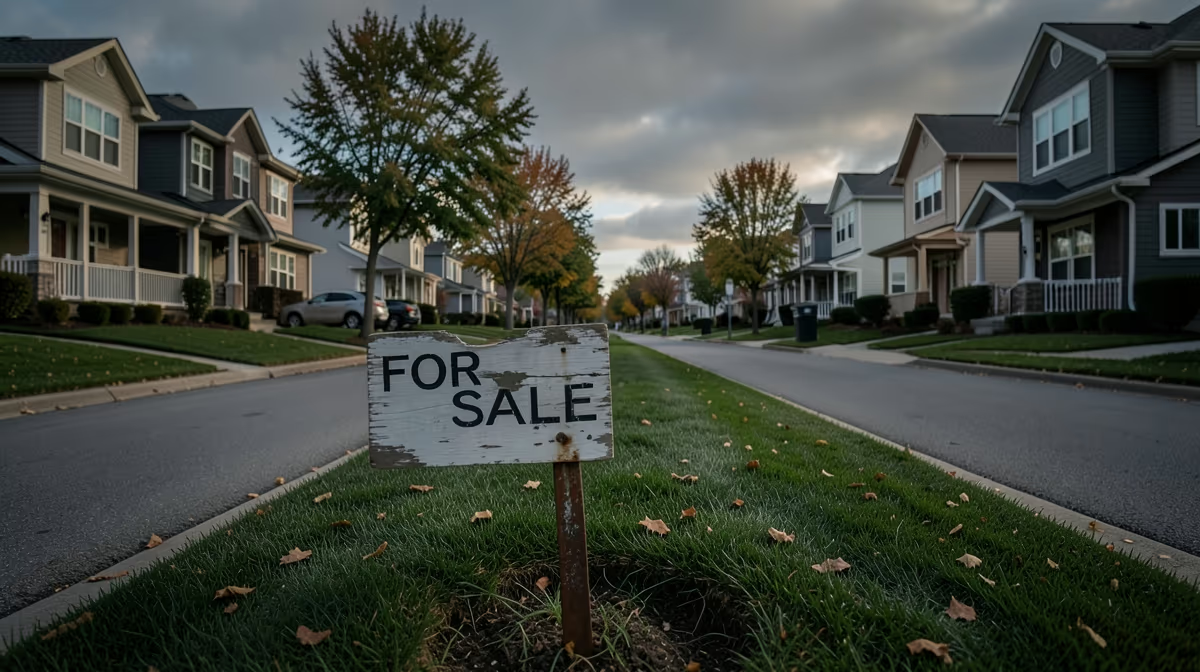
The American real estate transaction pipeline has ground toward an unprecedented halt, leaving prospective buyers stranded at the threshold of the property market. US pending home sales dropped significantly this month, marking a historic low as buyers struggle with affordability amid a sharp escalation in borrowing costs. Contract signings for home purchases plunged to a 25-year low, underscoring an abrupt retreat from a market where escalating financing barriers are redefining the terms of property ownership.
The contraction in US pending home sales to a 25-year low signals a severe liquidity freeze across residential real estate, driven by the acute affordability squeeze of surging mortgage rates.
What Unfolded in the Housing Market
The downturn across the residential sector reflects a sweeping retreat by consumers who find themselves priced out of market participation. As borrowing costs climbed sharply, prospective buyers fled the scene, prompting a steep contraction in transaction volumes. This contraction was acutely visible in September data, which recorded a major slide in contract signings nationwide.
The transaction freeze is not isolated to niche corners of the property sector. Regional housing markets have felt the weight of these shifts intensely, with home sales falling significantly across major territories including California and local hubs like San Diego. Faced with a dramatic shift in financing expenses compared to conditions seen just a few years ago, households are opting to halt negotiations or withdraw entirely.
The Mechanics of the Affordability Squeeze
At the root of this market paralysis sits a compounding squeeze driven by persistently high borrowing charges. The rapid run-up in mortgage rates has constrained both prospective home purchasers and existing property owners, effectively freezing the normal flow of transactions.
| Housing Sector Metric | Recorded Level | Market Implication |
|---|---|---|
| Pending Home Sales | 25-Year Low / Record Low | Transaction pipeline stalled across nationwide residential markets |
| Home-Builder Sentiment | 14-Year Low | Severe industry caution, scaling back future construction plans |
| Regional Home Sales | Marked Regional Drops | Widespread pressure, observed in markets like California and San Diego |
Historically, the real estate landscape remains deeply sensitive to baseline interest shifts and lending rates. Central banks adjusting monetary policy to counter inflation inevitably drive mortgage rates upward, naturally cooling borrowing demand and stalling contract activity. In the current cycle, existing homeowners holding lower rates find themselves locked into their existing properties, unwilling or unable to exit favorable financing arrangements. Concurrently, buyers face financing terms that make entering the market significantly more expensive.
When home sales grind to a halt and builder confidence plummets, it ripples through the broader economy, affecting everything from construction jobs to retail sales of home goods.
Widespread Strain Across the Building Industry
The consequences of stalled sales have rapidly migrated up the supply chain, striking residential construction firms. U.S. home-builder sentiment sank to a 14-year low, signaling profound hesitation among property developers. As buyer demand evaporates, builders face mounting inventory risks and declining foot traffic, prompting them to dial back their operational optimism.
This dual contraction—falling buyer contracts alongside deteriorating builder sentiment—illustrates how thoroughly financing costs have permeated the sector. The hesitation among developers risks entrenching broader inventory shortages over the long run, compounding the structural supply issues that already challenge the market.
The Human and Economic Repercussions
The paralysis in contract signings creates economic friction well beyond the primary mortgage sector. A frozen transaction pipeline directly challenges:
- First-time homebuyers encountering severe price-to-income hurdles
- Real estate agents experiencing diminished closing commissions and shrinking inventory
- Homebuilders managing stalling developments and declining project confidence
- Mortgage lenders navigating weakened loan application volumes
- Ancillary service providers tied to moving, residential repairs, and home furnishings
Beyond these operational impacts, the gridlock highlights an intensifying wealth divide. As prospective buyers—particularly younger demographics—find themselves priced out of homeownership, their capacity to build long-term residential equity diminishes. Concurrently, institutional landlords maintain leverage to consolidate single-family housing inventory, altering long-term ownership patterns.
The historical precedent for such a sudden liquidity chill points back to the early 1980s interest rate shock under Federal Reserve Chair Paul Volcker, when aggressive tightening actions similarly froze housing market turnover and tested broader economic resilience.
The Policy and Global Dimension
The sharp drop in pending contracts has elevated housing affordability into a pressing political issue in Washington. With rising rates straining household balance sheets, policymakers and central bankers face mounting scrutiny over the collateral effects of sustained borrowing pressure. Prospective buyers, finding typical milestones out of reach, face difficult economic choices that older generations may not fully recognize given historical disparities in entry costs.
On an economic level, prolonged domestic housing friction diverts consumer capital toward servicing baseline shelter expenses. As resilience faces structural headwinds from high shelter costs, the resulting deceleration in household mobility and secondary spending carries indirect implications for market liquidity and general investor confidence.
Market Outlook and Developing Scenarios
Over the next 24 to 72 hours, financial analysts and real estate economists are set to continue parsing transaction metrics to assess regional disparities and the trajectory of home-builder sentiment. Market analysts generally anticipate ongoing stagnation in contract signings as long as mortgage rates remain anchored at elevated plateaus.
Potential Trajectories
- Stabilization Scenario: Mortgage rates show signs of relief or stabilize, encouraging sidelined purchasers to incrementally return to negotiations and preventing deeper drops in contract signings.
- Protracted Contraction Scenario: Persistently high rates maintain a structural freeze on sales, depressing builder sentiment further and intensifying pressure across lending institutions and construction workforces.
Frequently Asked Questions
Why did US pending home sales drop to a record low?
Pending home sales fell to historic lows primarily due to a sharp surge in mortgage rates, which significantly increased borrowing costs and priced many prospective buyers out of the market.
How low has real estate activity fallen?
Contract signings for home purchases sank to a 25-year low, while U.S. home-builder sentiment dropped to a 14-year low.
Which regional markets are seeing noticeable drops in home sales?
Marked sales declines have been recorded across several areas, including California and specifically within the San Diego real estate market.
Conclusion
US pending home sales have dropped to historic lows alongside a steep retreat in builder confidence to a 14-year low, driven by surging mortgage rates that have frozen transaction activity. With major regions like California recording noticeable contractions, the residential sector remains caught in an affordability squeeze. Whether contract activity begins to recover depends entirely on the future trajectory of borrowing costs and the stabilization of mortgage lending conditions.
Sources
- Home contract signings plunged in September amid higher mortgage rates — Yahoo Finance
- US pending home sales fall to record low as mortgage rates surge — Financial Times
- Pending home sales sink to 25-year low as buyers flee high mortgage rates — MarketWatch
- Why buying a house feels so painful now — and your parents may not understand — The Washington Post
- U.S. Home-Builder Sentiment Sinks to 14-Year Low — WSJ
- Home sales drop across California and San Diego as mortgage rates rise — cbs8.com


